News

Appointment-of-Assistant-Professor-Hannah-Clapham-as-Director-of-the-Centre-for-Epidemic-Research-and-Modelling-(CERM)

Appointment of Assistant Professor Hannah Clapham as Director of the Centre for Epidemic Research and Modelling (CERM)

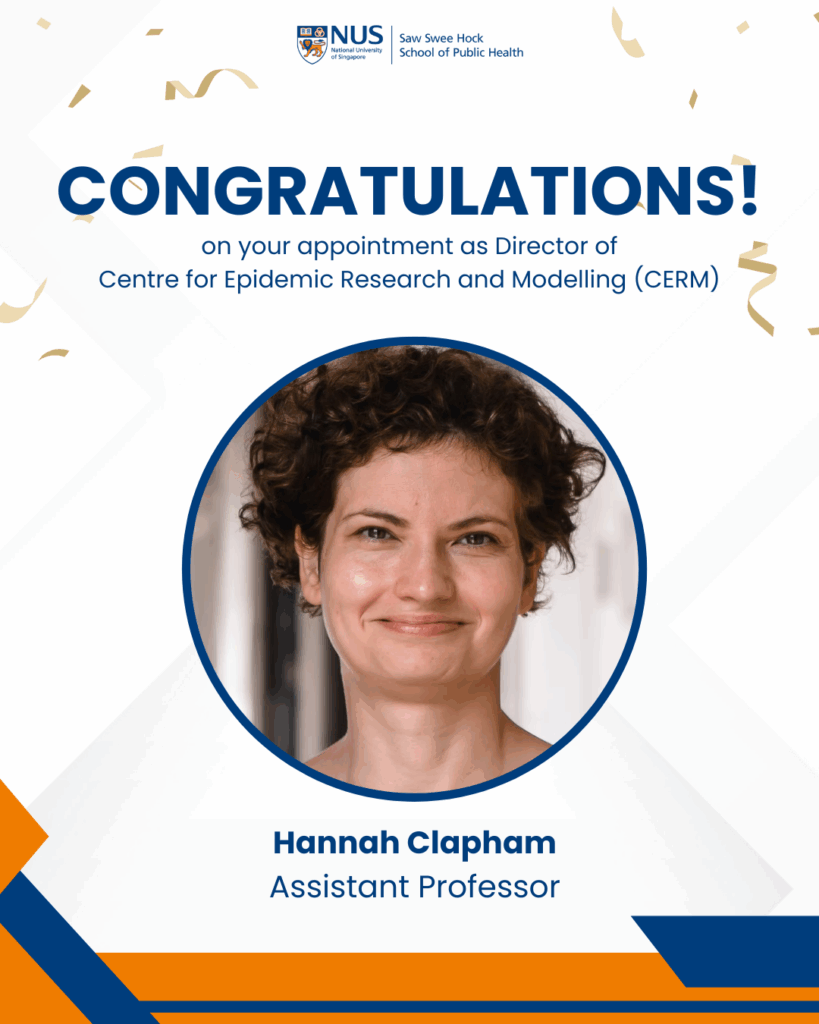
We are pleased to announce the appointment of Assistant Professor Hannah Clapham as Director of the Centre for Epidemic Research and Modelling (CERM), with effect from 23 February 2026.

CERM serves as a vital nexus between academic research and public health practice. Through real-time epidemiological insights and advanced predictive modelling of infectious diseases, the Centre enables timely, evidence-based decision-making during outbreaks and public health emergencies. Its mission is to advance the science of infectious disease modelling, inform policy through rigorous and innovative research, and train the next generation of modelling experts. The Centre continues to strengthen its contributions in delivering high-quality research that supports policymakers in Singapore, across the region, and globally.

Hannah is an infectious disease epidemiologist whose work applies mathematical modelling and data analytics to understand disease transmission and control. Her research spans arboviruses, vaccines, sero-epidemiology, and preparedness modelling. Prior to joining the School in 2020, she conducted postdoctoral research in the United States and led the mathematical modelling group at the Oxford University Clinical Research Unit in Ho Chi Minh City, Vietnam. Since 2022, she has served with distinction as Leader of the School’s Infectious Diseases Programme.

Assistant Professor Swapnil Mishra will continue in his role as Deputy Director of CERM, providing strong strategic and scientific leadership in support of the Centre’s work.

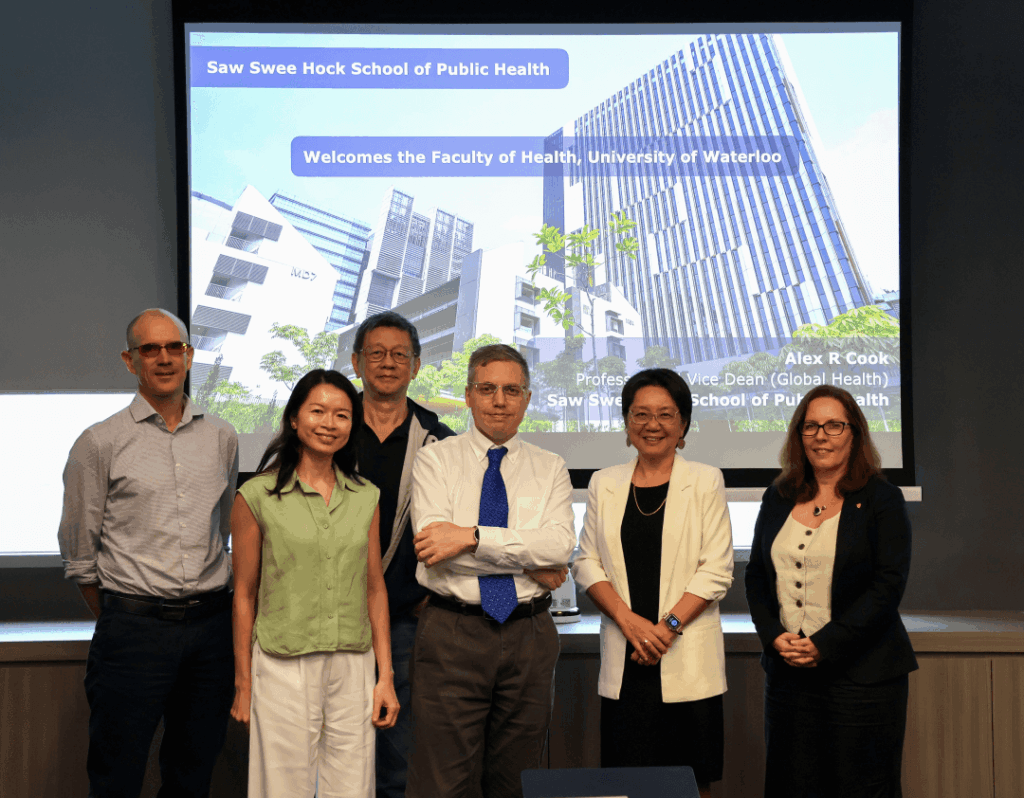
We would also like to express our sincere appreciation to Professor Alex Cook for his pioneering leadership as Director over the past year and for his significant contributions to advancing CERM’s impact.

Please join us in congratulating Hannah on her appointment and in wishing her every success in this important role.
Appointment of Assistant Professor Hannah Clapham as Director of the Centre for Epidemic Research and Modelling (CERM) Read More »

Lao-Development-Fund-Fellowship-Application-Poster-V2

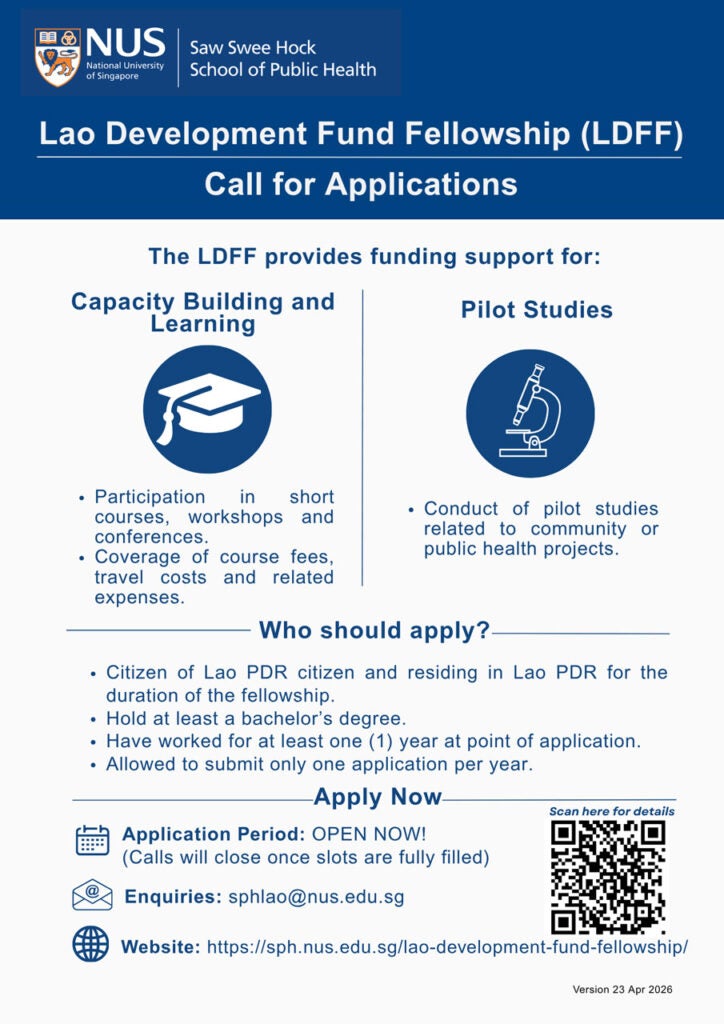
Lao Development Fund Fellowship

The Lao Development Fund Fellowship (LDFF) was established to enhance the skills and capabilities of Lao researchers and public health specialists, with a focus on early-career professionals. Through small-scale funding, the fellowships aim to advance their career development while supporting initiatives that benefits communities across Lao PDR.   Find out more about the Fellowship  

Lao Development Fund Fellowship Read More »

SPH2801-Health-Equity-Global-Insights-Asian-Applications-Image-1

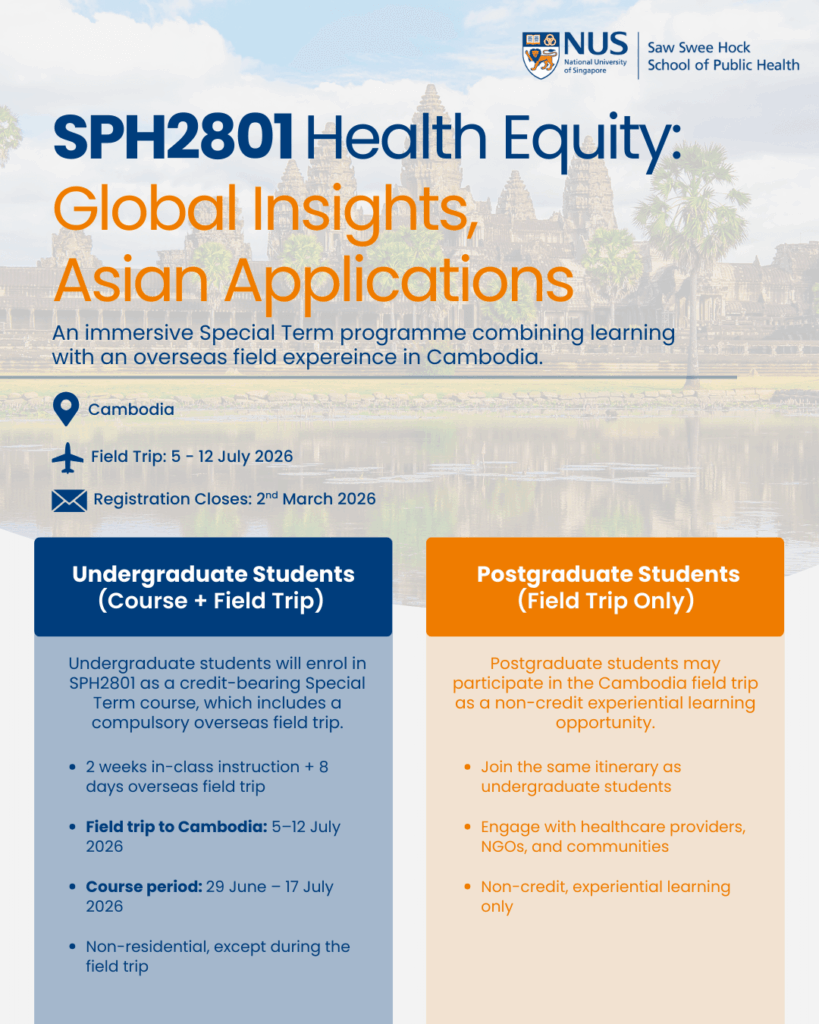
SPH2801 Health Equity: Global Insights, Asian Applications

SPH2801 is a Special Term course that examines the structural, socioeconomic, cultural, and political factors shaping health equity, with a particular focus on Asia. Through a combination of classroom learning and overseas field engagement, students gain a deeper understanding of how health inequities manifest in real-world settings and how they are addressed in practice.
A core component of the course is an immersive field trip to Cambodia, where students engage with communities, healthcare providers, and organisations working to advance more inclusive and equitable health systems.
Participation Pathways
Undergraduate students: Undergraduate students will enrol in SPH2801 as a credit-bearing Special Term course, which includes a compulsory overseas field trip.
Postgraduate students: Postgraduate students may participate in the Cambodia field trip as a non-credit experiential learning opportunity, joining the same itinerary as undergraduate students.
Key Details
Field Trip Location: Cambodia
Field Trip Dates: 5–12 July 2026
Registration Closes: 2 March 2026, 11:59 PM
For queries, please email UGhelp_SPH@nus.edu.sg. Click the buttons below to register.

SPH2801 Health Equity: Global Insights, Asian Applications Read More »

Are-we-about-to-live-through-a-Nipah-pandemic?

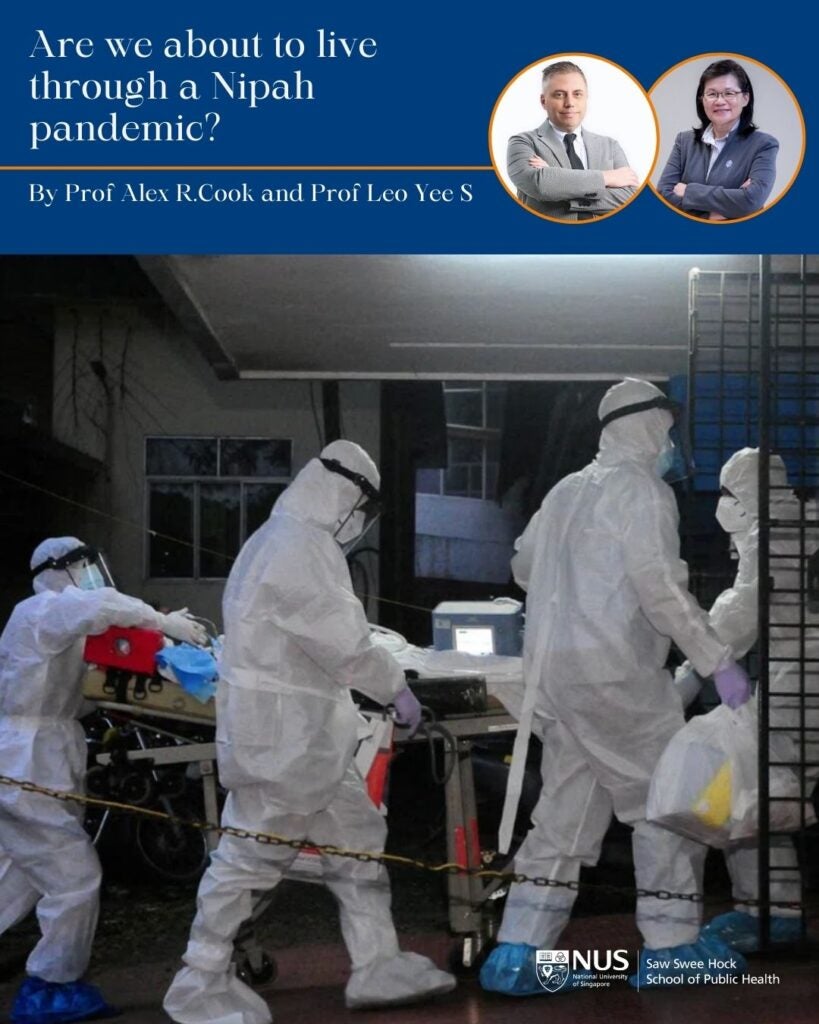
Are we about to live through a Nipah pandemic?

Two newly confirmed Nipah virus cases in West Bengal have renewed global attention on the deadly but rare infection. While a large-scale outbreak remains unlikely, healthcare workers face elevated risks, underscoring the importance of sustained preparedness.

Drawing on Singapore’s experience during the 1999 Nipah outbreak and subsequent public health crises such as SARS, experts highlight how measures including personal protective equipment, isolation protocols, diagnostics, and robust contact tracing can effectively contain spread.

Are we about to live through a Nipah pandemic? Read More »

New-Occupational-Medicine-Excellence-Medal-Established-to-Honour-Professor-David-Koh

New Occupational Medicine Excellence Medal Established to Honour Professor David Koh

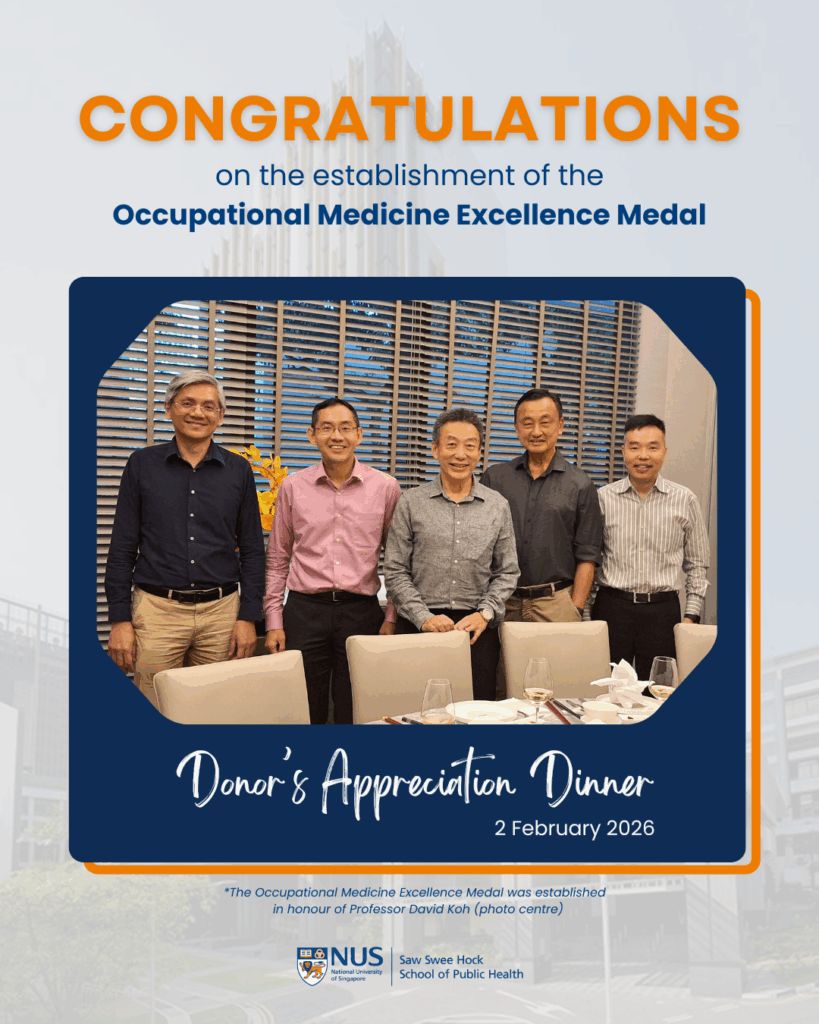
The NUS Saw Swee Hock School of Public Health (SSHSPH) is proud to announce the establishment of the Occupational Medicine Excellence Medal, a new award created to recognise the next generation of leaders in workplace health.

The medal was made possible through a successful fundraising campaign led by SSHSPH alumnus Assoc Professor Gan Wee Hoe. Spanning 2024 to 2025, the initiative raised a capital sum of S$75,000 through the generous contributions of many former students of Prof Koh, alumni and friends.

Honouring a Global Leader in Occupational Health
The medal is named in honour of Professor David Koh, a distinguished researcher and educator whose work has shaped occupational health policy and research internationally. Known for his expertise in environmental medicine and his dedication to preventing work-related diseases and fatalities, Professor Koh’s legacy will inspire future generations of occupational health professionals through this annual award.

The Occupational Medicine Excellence Medal will be awarded to graduates of the Master of Public Health (MPH) with a specialisation in Occupational Health who demonstrate a rare combination of academic brilliance and significant extra-curricular contributions.

A Night of Appreciation
On 2 February, the School hosted an appreciation dinner to thank the donors who made this vision a reality. The evening was a celebration of the enduring bond between the School and its alumni, and a shared commitment to excellence in public health.

New Occupational Medicine Excellence Medal Established to Honour Professor David Koh Read More »

PMAC-2026-Special-Session-The-Future-of-Global-Health-Governance-in-a-Fragmented-World-1

PMAC 2026 Special Session: The Future of Global Health Governance in a Fragmented World

The global health governance landscape is at a critical juncture. Post–World War II multilateral models are increasingly strained by geopolitical fragmentation, declining development aid, and persistent failures to address transnational crises—from pandemics and climate change to conflict. At the same time, shrinking Official Development Assistance and a shift from grants to loans are deepening debt burdens in low-income countries.

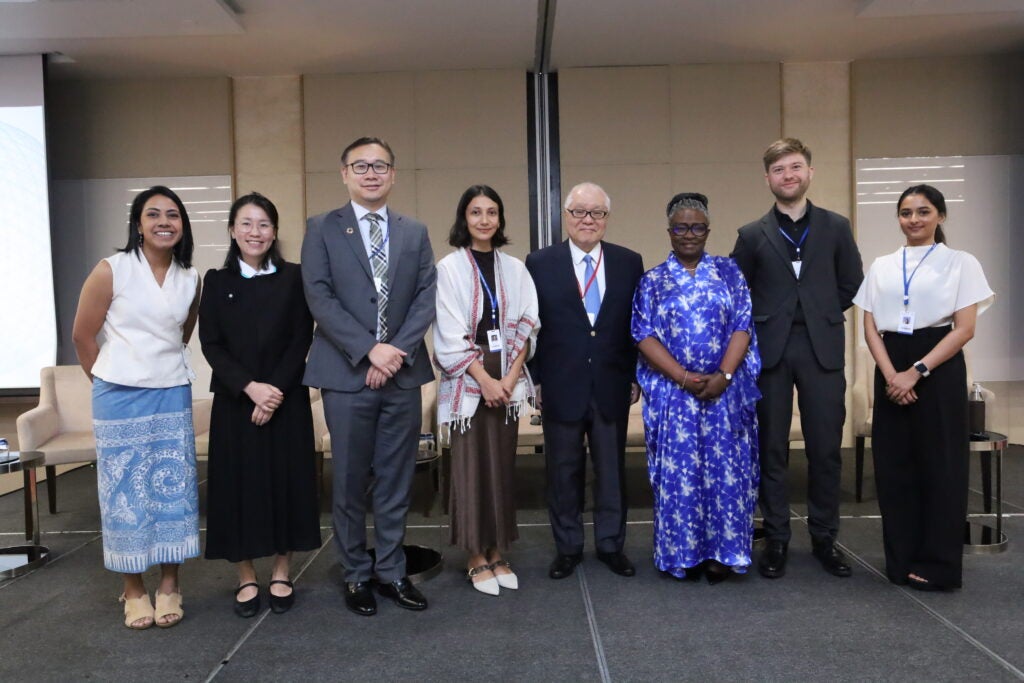
Against this backdrop, Dean, Prof Teo Yik Ying, Asst Prof Kiesha Prem and Ms Afifah Ismat Rahman-Shepherd represented the School at the Special Session: The Future of Global Health Governance in a Fragmented World, held at the Prince Mahidol Award Conference (PMAC) 2026.

The Special Session shared the findings from the Asia-Pacific Regional Dialogue on Global Health Architecture Reform, including the three-day Singapore convening held back in November 2025. The Asia-Pacific regional consensus highlighted the need for a nationally designed, regionally coordinated and globally aligned global health architecture.

This extraordinary session was enriched with three panel discussions which moved beyond aspirational rhetoric to explore pragmatic, equity-centred strategies across three critical dimensions:
• Changes in the global health architecture and their implications for governance, diplomacy, and the financing of global health
• Reimagining new models of governance and health diplomacy suited to a multipolar and fragmented world
• Reimagining alternative and sustainable models of global health financing, beyond traditional aid-dependent paradigms

By examining decentralized and polycentric approaches, regional alliances, and innovative financing mechanisms, the session aimed to restore trust, strengthen resilience, and ensure inclusive participation for an equitable global health future.

Read the full report on Reimagining Global Health Reform in the Asia Pacific.

PMAC 2026 Special Session: The Future of Global Health Governance in a Fragmented World Read More »

Advancing-water-security-and-health-equity-through-Thai–Singaporean-collaboration-1

Advancing water security and health equity through Thai–Singaporean collaboration

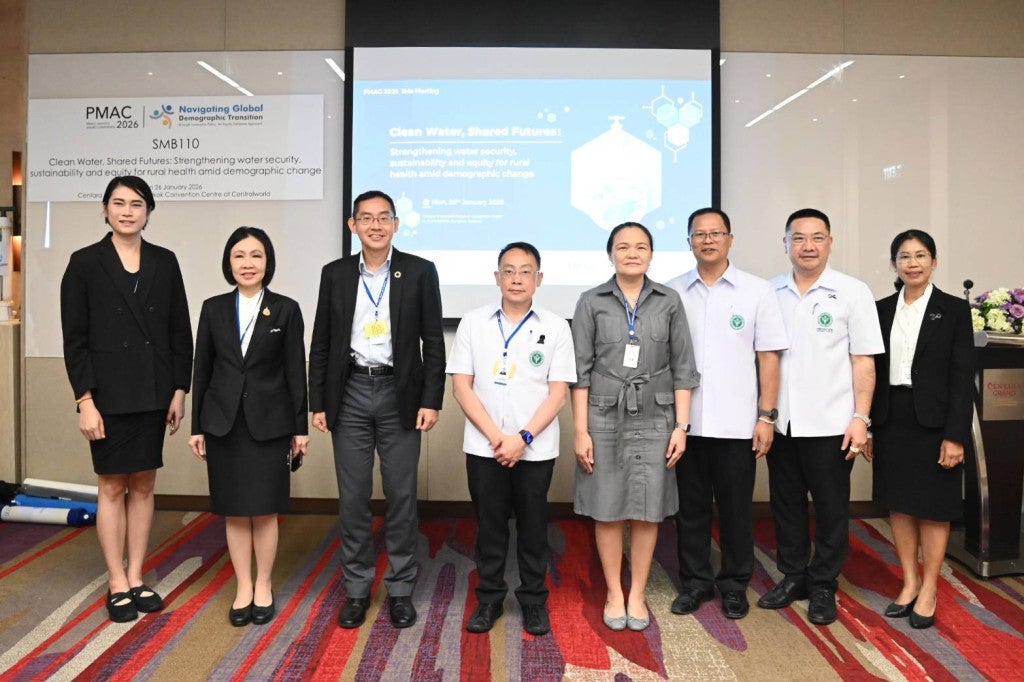
At PMAC 2026, we were honoured to join HITAP, Wateroam, and network partners to advance sustainable access to safe, clean water for rural communities. On 26 January at the Centara Grand Bangkok Convention Centre at CentralWorld, Dr. Somruk Chungsaman, Permanent Secretary of the Ministry of Public Health, opened the seminar, “Clean Water, Shared Futures: Strengthening Water Security, Sustainability and Equity for Rural Health amid Demographic Change.”

Discussions spanned:

– Assessing water security in rural schools and healthcare facilities
– Tackling emerging threats from microplastics and environmental pollution
– Community perspectives from remote areas, alongside insights from the Environmental Justice Foundation (EJF)
– Lessons from collaboration in Laos and approaches for Thailand’s rural schools
– Findings from satisfaction and impact studies using Photovoice
– A new model for evaluating the cost-effectiveness of investments in water security
– Live demonstrations of innovative water filtration technologies, usage, and water quality testing

The Thai–Singaporean pilot is installing innovative water filtration systems at Mae Tuen Wittayakom School (Omkoi, Chiang Mai) and Border Patrol Police School No. 87 (Mae Fah Luang, Chiang Rai), with the goal of delivering sustainable, safe water access and reducing health disparities in remote areas.

As Dr. Somruk emphasized, “Clean water is the foundation of good health… Access to clean and safe water is about restoring fundamental rights and equality, ultimately reducing the burden on the Thai public health system.”

We commend HITAP, the Ministry of Public Health, Wateroam, EJF, and all partners for advancing evidence-based solutions—combining proven technology, research, cost–benefit analysis, and community feedback—to address structural challenges for the long term.

Advancing water security and health equity through Thai–Singaporean collaboration Read More »

Scroll to Top