

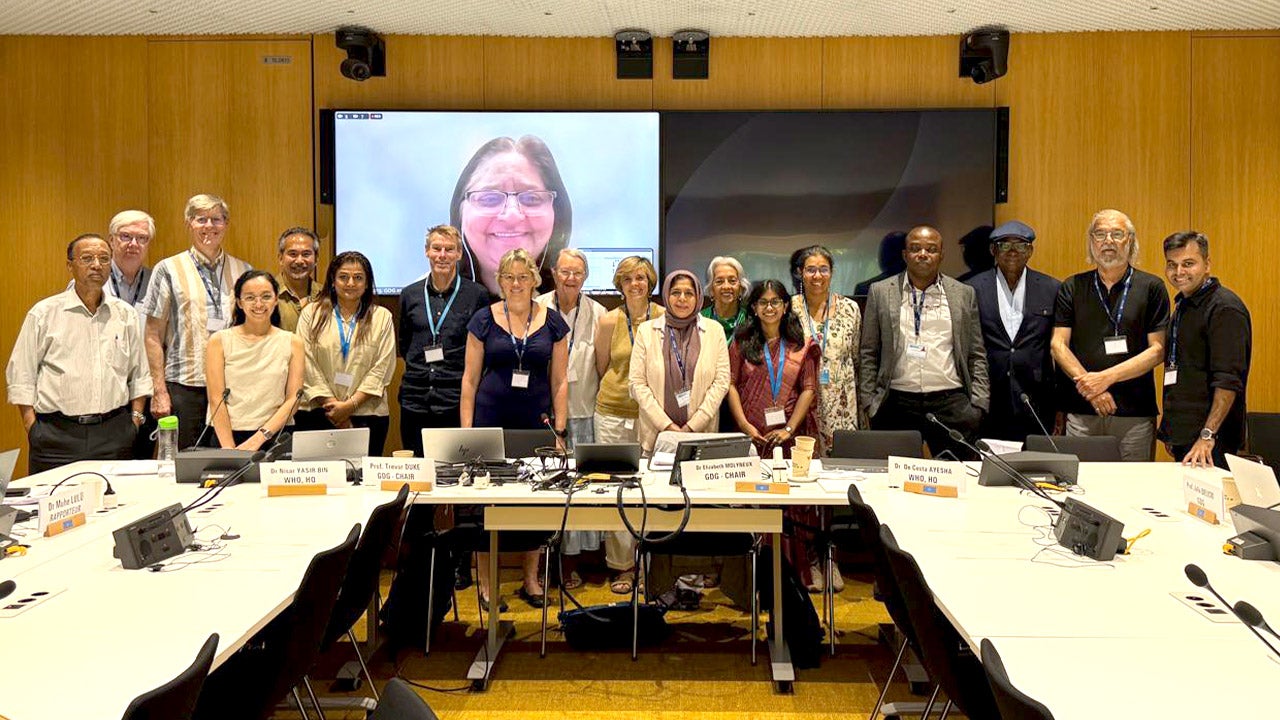
Dr. Ruth Divine Daguro Agustin, our NUS School of Public Health MPH student, participated in a recent Guideline Development Group (GDG) meeting, chaired by the World Health Organisation (WHO) in Geneva, Switzerland.
In 2018, WHO recorded that about 5.3 million children under the age of five died. The WHO guideline on the Mass Drug Administration (MDA) of Azithromycin is intended to contribute to the achievement of the United Nations Sustainable Development Goal (SDG) 3, aiming to end all preventable deaths of newborns and children under the age of five by 2030 (Source: https://www.ncbi.nlm.nih.gov/books/NBK561639/).
The recent GDG meeting serves to update this guideline. This includes the assessment of age‑specific effects and contextual factors such as baseline mortality, malaria endemicity and health system capacity. The GDG members looked into the potential risks associated with Azithromycin MDA, such as the implications on antimicrobial resistance over time. This meeting provided evidence-informed recommendations on how the MDA of Azithromycin, as a public health intervention to reduce under-five mortality, should be implemented.
The GDG consisted of multidisciplinary experts from all WHO regions, serving in their individual capacities, and selected based on technical expertise, role as end‑users, and experience working in low‑ and middle‑income country settings. All GDG members underwent a rigorous assessment of conflicts of interest.
Over the course of 3 days, the GDG members discussed systematic reviews, evidence summaries, modelling results, technical updates, and proposed updated WHO recommendations for the use of MDA Azithromycin.
Dr. Ruth provided inputs based on her experiences in guideline development, programme implementation and policymaking in the Philippines, she learned a lot from fellow GDG members.
Additional information on the WHO guideline and profiles of GDG members is available here: