

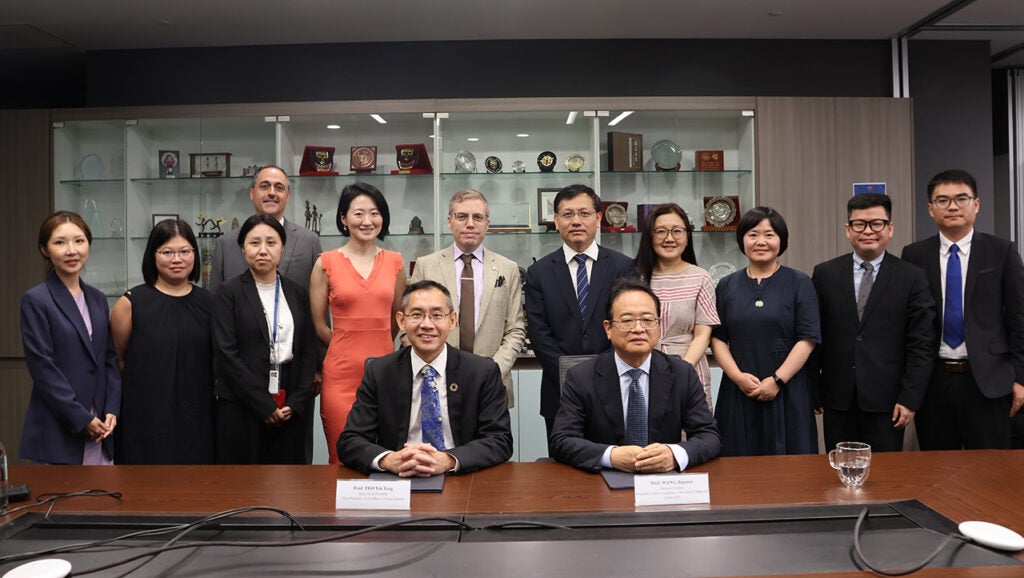
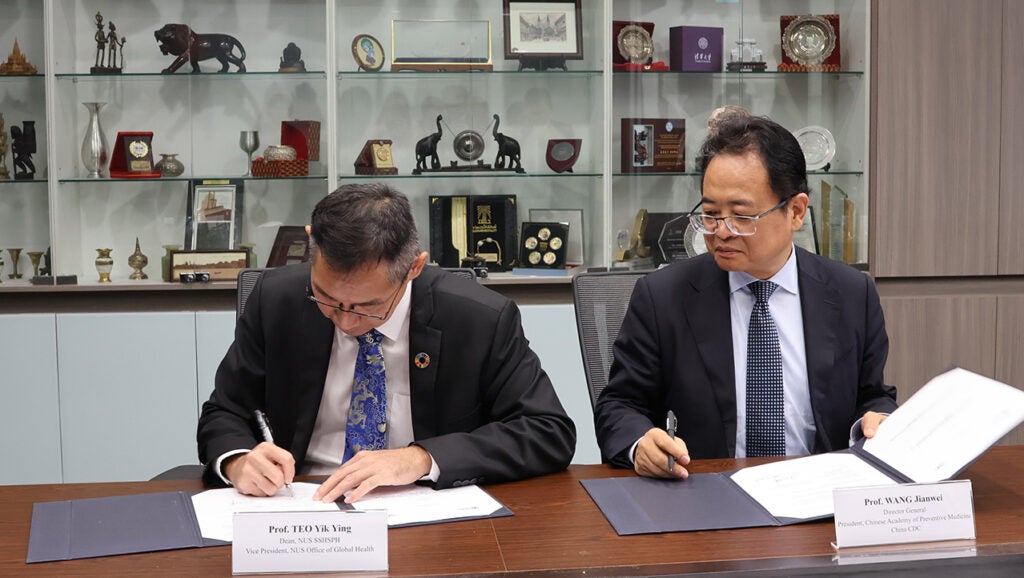
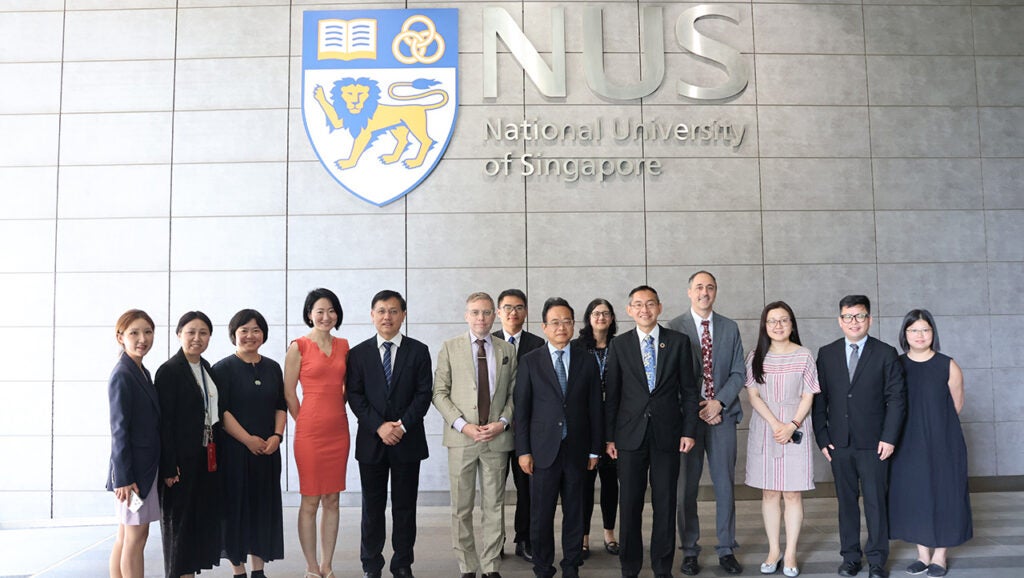
On 4 September 2026, the Global Health Office (GHO) at Saw Swee Hock School of Public Health (SSHSPH), NUS, had the pleasure of meeting with a delegation from the Chinese Center for Disease Control and Prevention (China CDC), culminating in the signing of an MOU to support long-term institutional collaboration.
The visit brought together faculty with shared interests in wastewater and antimicrobial resistance (AMR) surveillance, infectious disease modelling, and using data to guide public health policy and decision-making.
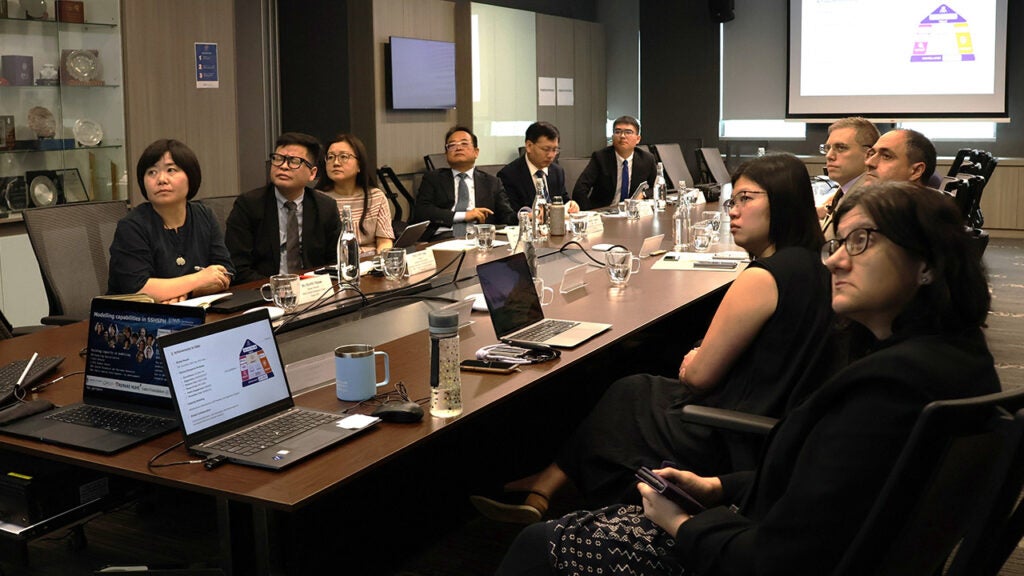
Following an insightful presentation by Prof Tang Song, Director of the Departments of Environmental Toxicology and Environmental Microbiology at the National Institute of Environmental Health, China CDC, Dean, Prof Teo Yik Ying raised questions about China CDC’s experiences in translating surveillance data into public health policy. This sparked a lively exchange of experiences, ideas and questions around the room. A/Prof Yann Felix Boucher also shared perspectives from his work in environmental health, pathogen transmission and antimicrobial resistance.
Building on the discussion around data and decision-making, Prof Alex Cook shared lessons from Singapore’s management of inbound travel during COVID-19, illustrating how observational data can inform policy options. His examples highlighted the challenge of weighing vaccines, treatments and environmental controls while considering effectiveness, costs and longer-term implications.
Assoc Prof Mo Yin then introduced her ADVANCE-ID team, a global clinical trial network headquartered at the NUS School of Public Health. With more than 200 sites across over 30 countries, particularly LMICs in Asia and beyond, ADVANCE-ID connects surveillance, rapid diagnostics, prevention and platform treatment trials within an integrated research ecosystem. At its heart is an equitable, locally driven approach, where investigators shape research priorities according to their healthcare settings. Its recent designation as a WHO Collaborating Centre for clinical trials further supports efforts to generate practice-changing evidence and improve access to effective diagnostics and treatments.
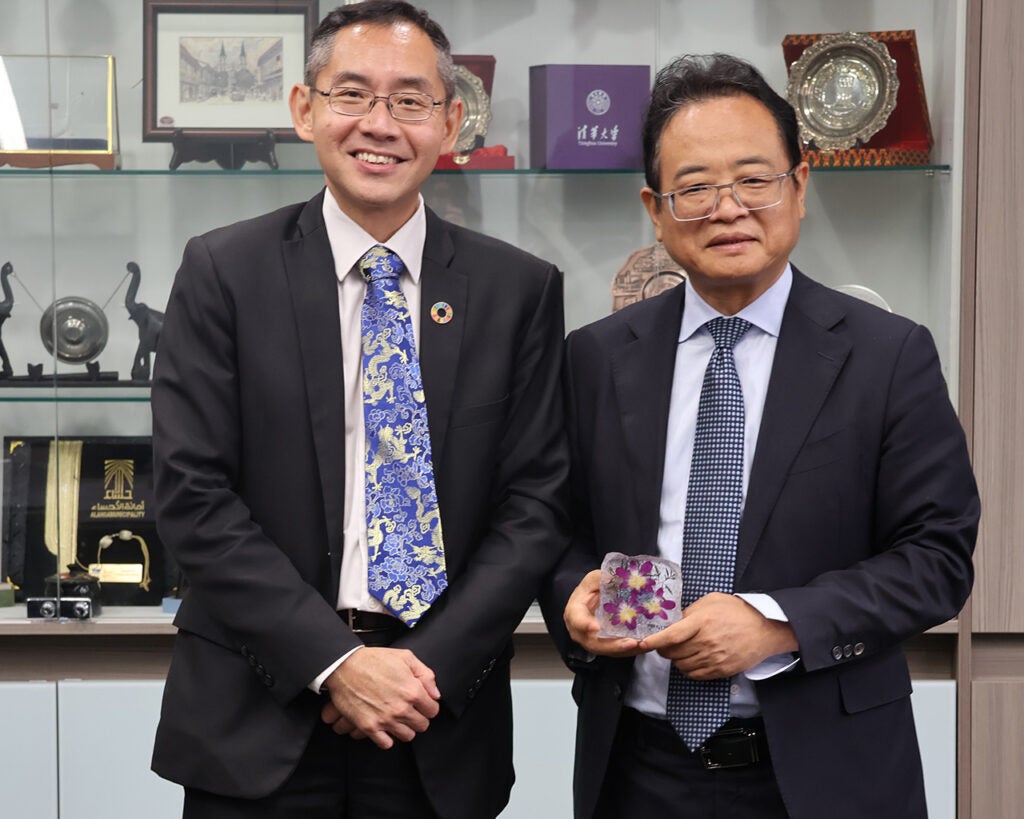
Beyond research, there was strong shared interest in education and talent exchange, with opportunities to nurture the next generation of public health professionals and decision-makers.
By bringing together strengths in public health research, modelling and health systems evaluation with China CDC’s epidemiological expertise and frontline experience, the partnership creates opportunities to learn from one another and tackle emerging health challenges.
With the MoU in place, we look forward to keeping the conversations going, learning from each other, and seeing where these new connections may lead.