

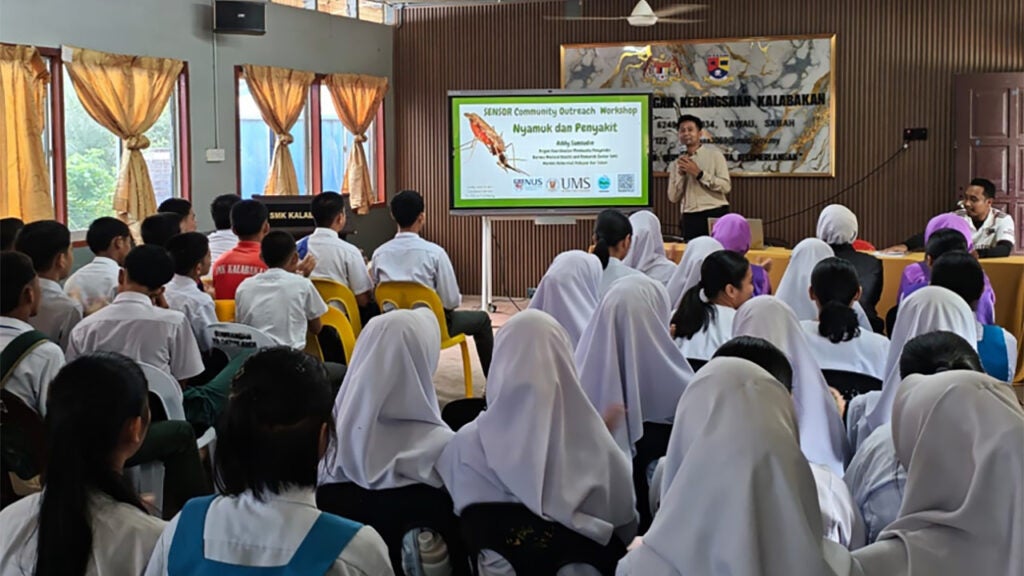
Held in conjunction with World Mosquito Day, more than 100 secondary school students from SMK Kalabakan in Sabah, Malaysia took part in a school engagement programme to strengthen awareness of zoonotic malaria, mosquito-borne diseases, and the links between environmental change and human health.
The programme was jointly organised by Universiti Malaysia Sabah (UMS), the National University of Singapore (NUS), and PACOS Trust under the SENSOR Project, with support from Yellow Door Communications.
The SENSOR Project studies diseases transmitted by mosquitoes to monkeys and people, including dengue, malaria, Zika, and Chikungunya, within Southeast Asia.
The programme shared how changes to the environment such as deforestation, land-use change and climate change, can affect ecosystems. These factors can influence interactions between people, wildlife and disease vectors. This perspective is particularly relevant in communities that live near forests and wildlife, where environmental changes may contribute to changing patterns of exposure to mosquito-borne and other zoonotic diseases.
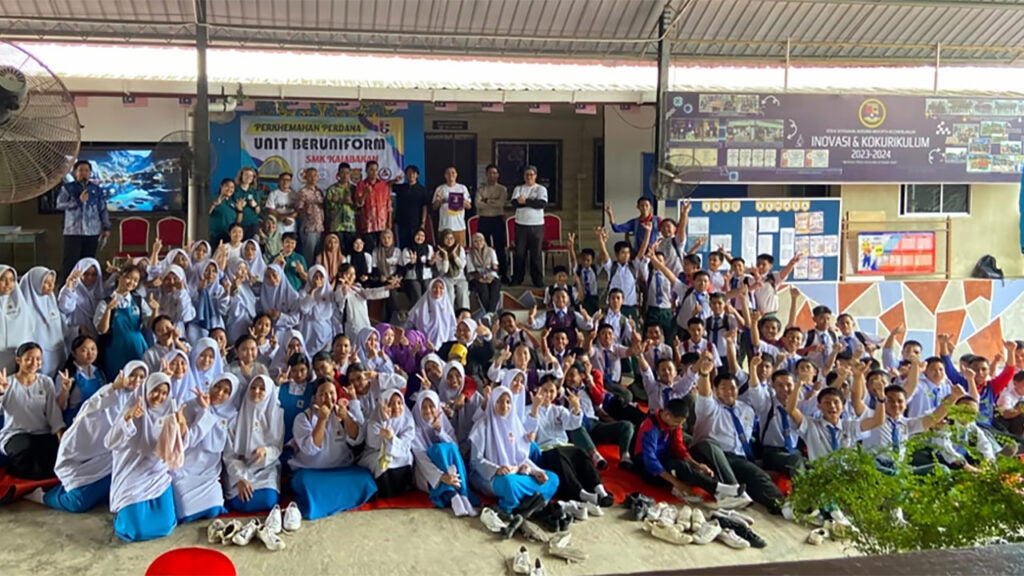
One of the key activities was the cooperative “Save Our Village” board game, which introduced students to different scenarios involving environmental changes, disease risks and preventive measures. The activities were designed to make complex scientific and health concepts easier for students to understand while encouraging them to recognise their own role in disease prevention.
Stronger partnerships between schools, higher education institutions and local communities support students’ understanding with relevant, visible examples about environmental change, climate change, and the impacts on health affecting their own communities.