

Global Health Thought Leadership Dialogue
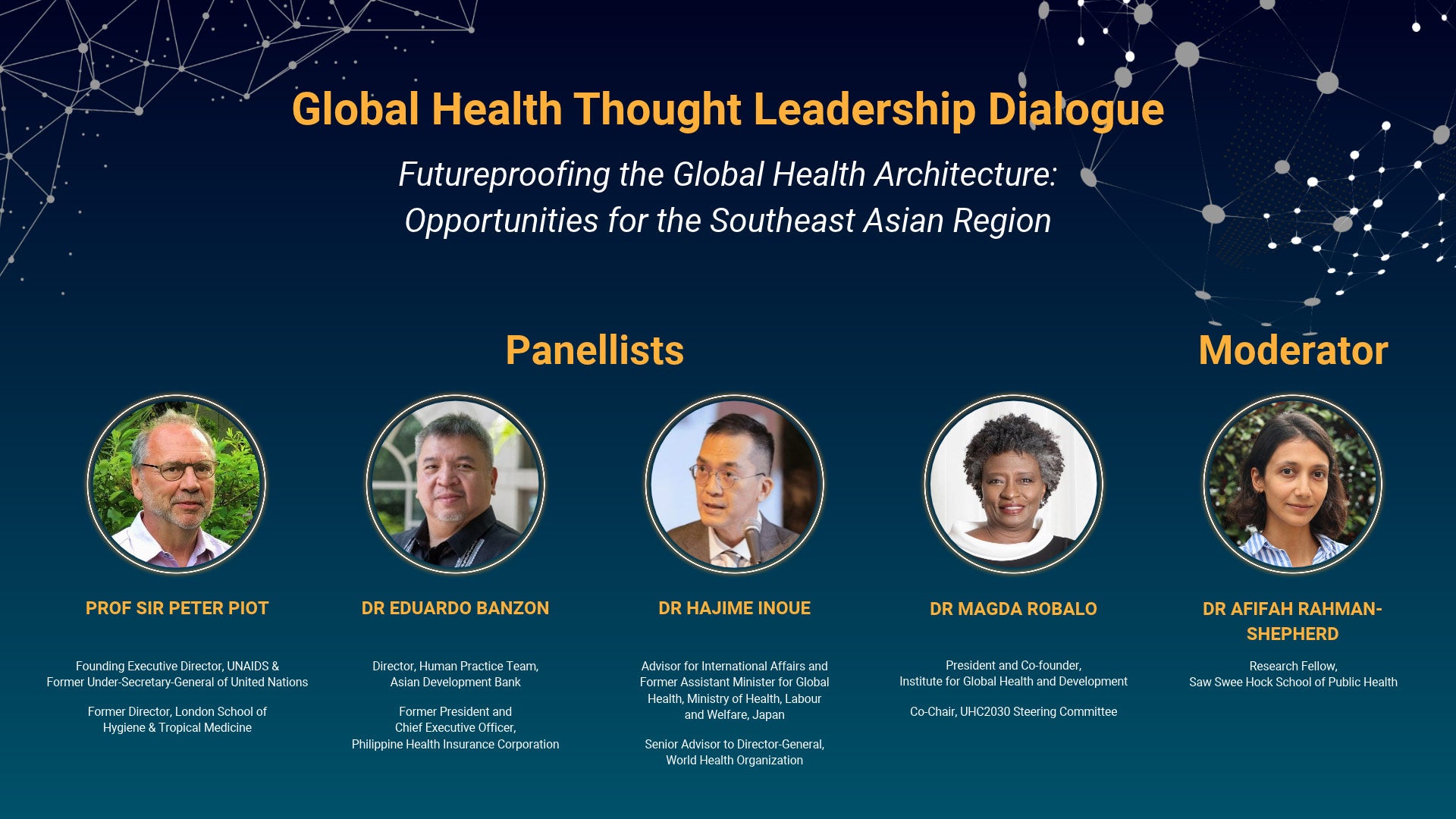
Futureproofing the Global Health Architecture: Opportunities for the Southeast Asian Region
The Accra Reset has issued clear recommendations for what countries, regions, and global institutions must do to build a more resilient health architecture. It calls for five fundamental political shifts that, taken together, reorder relationships and priorities – moving from nominal country ownership and aid-centred cooperation towards practical sovereignty and redefined regional solidarity, anchored by stronger global health institutions and independent accountability.
But what do these recommendations mean for Southeast Asia? What are the regional public goods and infrastructure that would anchor sovereignty, the financing that should be mobilised to make the region’s health security both sustainable and responsible, and the accountability and evaluation mechanisms that would turn ambition into measurable results? Confronting these questions is how the region moves to shape, rather than inherit, the architecture of its own health future, translating the Accra Reset’s principles into immediate actions Southeast Asia can undertake today.
Join us at this run of the Global Health Thought Leadership Dialogue, which convenes members of the Accra Reset to explore real-world solutions for the region.
* CME & CPE points pending approval
Date:
14 January 2027 (Thursday)
Time:
10.30pm – 12.00pm
Location:
Shaw Foundation Alumni House, Auditorium, Level 2
11 Kent Ridge Dr, Singapore 119244
Panellists
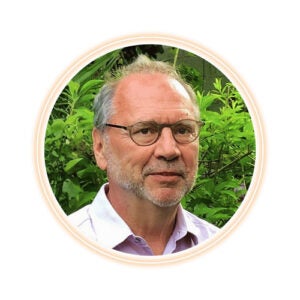
Founding Executive Director, UNAIDS & Former Under-Secretary-General of the United Nations
Former Director, London School of Hygiene and Tropical Medicine
Peter Piot, MD, PhD, is Professor of Global Health at the London School of Hygiene & Tropical Medicine (LSHTM), where he served as Director from 2010 to 2021, and at the Institute of Tropical Medicine Antwerp in his native Belgium. A physician, microbiologist, and global health leader, he co-discovered the Ebola virus in Zaire (now the Democratic Republic of the Congo) in 1976 and subsequently led pioneering research on HIV/AIDS, sexually transmitted infections, and women’s health, particularly in sub-Saharan Africa.
In the 1980s, he helped establish major international HIV research programs in Africa that contributed substantially to the early understanding of the epidemic. From 1995 to 2008, Professor Piot served as the founding Executive Director of UNAIDS and Under-Secretary-General of the United Nations, helping mobilize and shape the global response to HIV/AIDS. He has held academic and leadership positions at institutions in Europe, Africa, Asia, and the United States and continues to contribute to global health policy, epidemic preparedness, and international health governance.
Professor Piot is a member of several national academies of medicine and sciences and has received numerous international honors, including the Canada Gairdner Global Health Award, Hideyo Noguchi Africa Prize, Prince Mahidol Award, WHO Global Leaders Award, and the 2026 Virchow Prize. He has authored more than 650 scientific publications and 17 books, including his memoir No Time to Lose.

Director, Human Practice Team, Asian Development Bank
Former President and Chief Executive Officer, Philippine Health Insurance Corporation
Dr. Eduardo P. Banzon is the Director of the Health Practice Team under the Human and Social Development Sectors Group at the Asian Development Bank (ADB). Fondly known as Doc Dodo, he is a leading advocate for universal health coverage, spearheading ADB’s health sector initiatives and working closely with various sectors and departments to develop and implement health policies, strategies, and projects.
With over 34 years of experience, Doc Dodo brings deep expertise in public health and health systems, having held leadership and advisory roles in a wide range of organizations. He served as President and Chief Executive Officer in 2011 of the Philippine Health Insurance Corporation, the country’s national health insurer. Prior to ADB, he was Regional Adviser for Health Economics and Health Financing at the World Health Organization (WHO) Eastern Mediterranean Regional Office. His previous roles also include Health Economist, World Health Organization, Bangladesh; Senior Health Specialist, East Asia Pacific, World Bank; and Special Assistant to the Secretary, Philippine Department of Health (DOH) on Bureau of Food and Drugs (BFAD) concerns
In academia, Doc Dodo has served as a faculty member engaged in teaching, research, and scholarly work in the areas of universal health coverage, health financing, global and regional health, and health policy development at the University of the Philippines College of Medicine, the Ateneo Graduate School of Business, and the Asian Institute of Management (AIM). Currently, he is an Honorary Affiliate of the Saw Swee Hock School of Public Health of the National University of Singapore
Doc Dodo holds a Bachelor of Science in Biology from the University of the Philippines Diliman, a Doctor of Medicine from the UP College of Medicine, and a Master of Science in Health Policy, Planning, and Financing from the London School of Economics and the London School of Hygiene and Tropical Medicine.
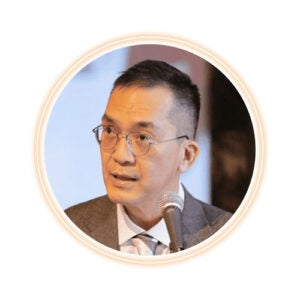
Advisor for International Affairs and Former Assistant Minister for Global Health, Ministry of Health, Labour and Welfare, Japan
Senior Advisor to Director-General, World Health Organization
Dr Hajime Inoue is Professor at the International University of Health and Welfare (IUHW) in Japan and serves as Advisor for International Affairs to Japan’s Ministry of Health, Labour and Welfare. He previously served as Assistant Minister for Global Health at the Ministry, where he was closely engaged in Japan’s global health policy, including universal health coverage (UHC), health financing, pandemic preparedness and response, antimicrobial resistance (AMR), and international health diplomacy.
Dr Inoue has worked across national and international institutions throughout his career. At the World Health Organization (WHO), he served as Senior Advisor to the Director-General and Special Representative for Antimicrobial Resistance. He has also served as an Advisor on Health, Nutrition and Population at the World Bank and held senior leadership positions in Japan’s health administration and national hospital system.
He has played a leading role in international discussions on UHC and the evolving global health architecture, including pandemic preparedness financing and efforts to strengthen country ownership, sustainable domestic financing, and global and regional public goods. He is currently involved in the WHO–World Bank–Japan UHC Knowledge Hub and related global leadership initiatives.
His recent work focuses on how the global health system can adapt to a changing international order by strengthening national sovereignty and institutions while applying the principle of subsidiarity to regional and global functions. He is a co-author of the 2026 Nature Medicine Commentary, “Rethinking the global health system for a new international order.”
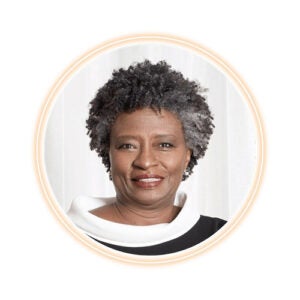
President and Co-Founder, Institute for Global Health and Development
Co-Chair, UHC2030 Steering Committee
Dr Magda Robalo is a senior global health leader, medical doctor, with more than thirty years of leadership across public health, infectious diseases, ethics, governance, and gender equality. She has held high-level national and international roles, combining technical excellence with political and diplomatic leadership in complex and resource-constrained settings.
She is President and Co-founder of the Institute for Global Health and Development (IGHD) and currently serves as Co-chair of the UHC2030 Steering Committee, Global Ambassador for the G20 and G7 Health and Development Partnership, a Commissioner of the Lancet Global Health Commission on People Centred Care for Universal Health Coverage, led by the Centre for Primary Care at the Harvard Medical School and a member of the Accra Reset High Level Panel, advancing universal health coverage, equity, health sovereignty and health security globally.
Previously, she served as Minister of Public Health and High Commissioner for COVID-19 in Guinea-Bissau, leading health sector reforms and the national pandemic response. Her international career includes over two decades with the World Health Organization Regional Office for Africa, where she held senior leadership roles, led large multidisciplinary teams, managed significant financial portfolios, and shaped regional strategies for disease control, epidemic preparedness, and maternal and child health.
Dr. Robalo holds a MD from Universidade do Porto, Portugal, with a postgraduate diploma in Public Health and Tropical Medicine (Universidade Nova de Lisboa, Portugal) and a Master of Science in Epidemiology (Université Laval, Canada).
Moderator
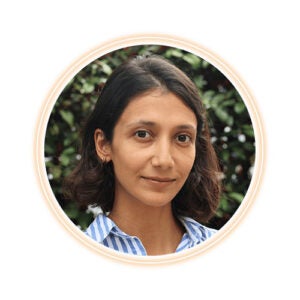
Research Fellow, Saw Swee Hock School of Public Health, NUS
Afifah is an interdisciplinary, mixed methods researcher with over a decade of experience in global health. She began her career in Southeast Asia, running clinical trials for tuberculosis treatment in Singapore, studying the epidemiology of different diseases in Indonesia, Thailand, and Cambodia, before grasping the wider set of political, economic, and social determinants that explain infectious disease dynamics in the region and beyond. Now, as a Research Fellow at the Saw Swee Hock School of Public Health, where she recently completed her PhD, Afifah’s research continues to adopt an interdisciplinary approach to explore the regional dimensions of pandemic governance, specifically the regional politics of health cooperation, the role regional institutions play, and the pathways toward a more robust and resilient regional governance architecture.
Prior to joining the School, Afifah was a Research Fellow at the London School of Hygiene and Tropical Medicine, a Consultant at IQVIA, a Research Associate at Chatham House, and a Research Intern at the Pasteur Institute and The Union Against TB and Lung Disease. She holds a BSc in Biomedical Science from UCL and a MSc in Control of Infectious Diseases from the London School.