News

1-National-Workshop-on-Strengthening-Antimicrobial-Stewardship-in-Healthcare-Facilities-in-Cambodia-and-Official-Launch-of-the-AMS-HICAP-Implementation-Research-Project

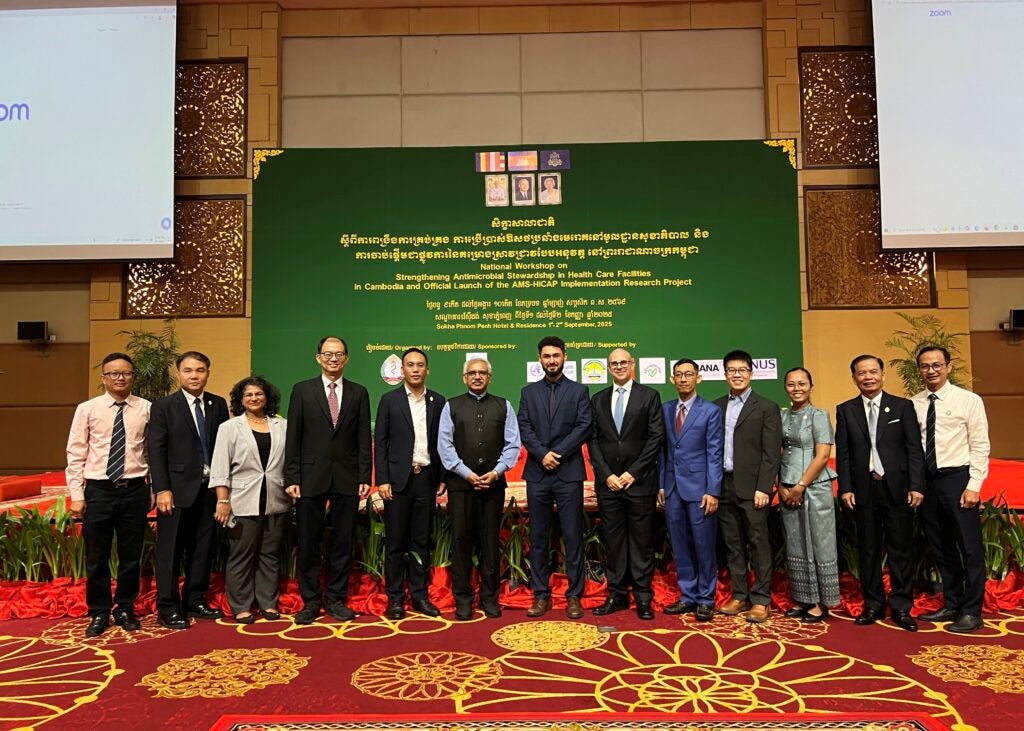
National Workshop on Strengthening Antimicrobial Stewardship in Healthcare Facilities in Cambodia and Official Launch of the AMS-HICAP Implementation Research Project

Dr. Alvin Chua and Professor Hsu Li Yang from the NUS Saw Swee Hock School of Public Health (SSHSPH) participated in a national workshop on antimicrobial stewardship (AMS) held from 1 to 2 September 2025 in Phnom Penh, Cambodia.

Organised by the Ministry of Health Cambodia and funded by the International Centre for Antimicrobial Resistance Solutions (ICARS), the workshop was supported by the World Health Organization (WHO) and core partners including the National Institute of Public Health, Calmette Hospital, Angkor Hospital for Children, KHANA, and NUS SSHSPH.

The event also marked the Official Launch of the AMS-HICAP Implementation Research Project, a new initiative funded by ICARS to strengthen AMS capacity in hospitals across the country. Dr. Chua and Prof. Hsu had previously collaborated with ICARS and the Cambodian core partners to develop the project.

The workshop brought together healthcare leaders from hospitals, universities, and international organisations to discuss the responsible use of antimicrobials and strategies to combat antimicrobial resistance (AMR). In his opening remarks, His Excellency Professor Chheang Ra, Minister of Health Cambodia, called for coordinated national and sub-national efforts to preserve the effectiveness of antimicrobials, improve health outcomes, and reduce costs.

Key recommendations included promoting responsible prescribing, enhancing training in universities, strengthening AMS and infection prevention and control (IPC), supporting laboratory collaboration, sharing AMR data, and advancing research partnerships.

Following the workshop, the core team conducted site visits to hospitals in Phnom Penh. These visits provided valuable insights into microbiology laboratories, IPC units, pharmacy services, and clinical wards, highlighting both progress and challenges in implementing AMS programmes.

National Workshop on Strengthening Antimicrobial Stewardship in Healthcare Facilities in Cambodia and Official Launch of the AMS-HICAP Implementation Research Project Read More »

Is-banning-and-punishing-enough-The-complex-reality-of-vaping-in-Singapore

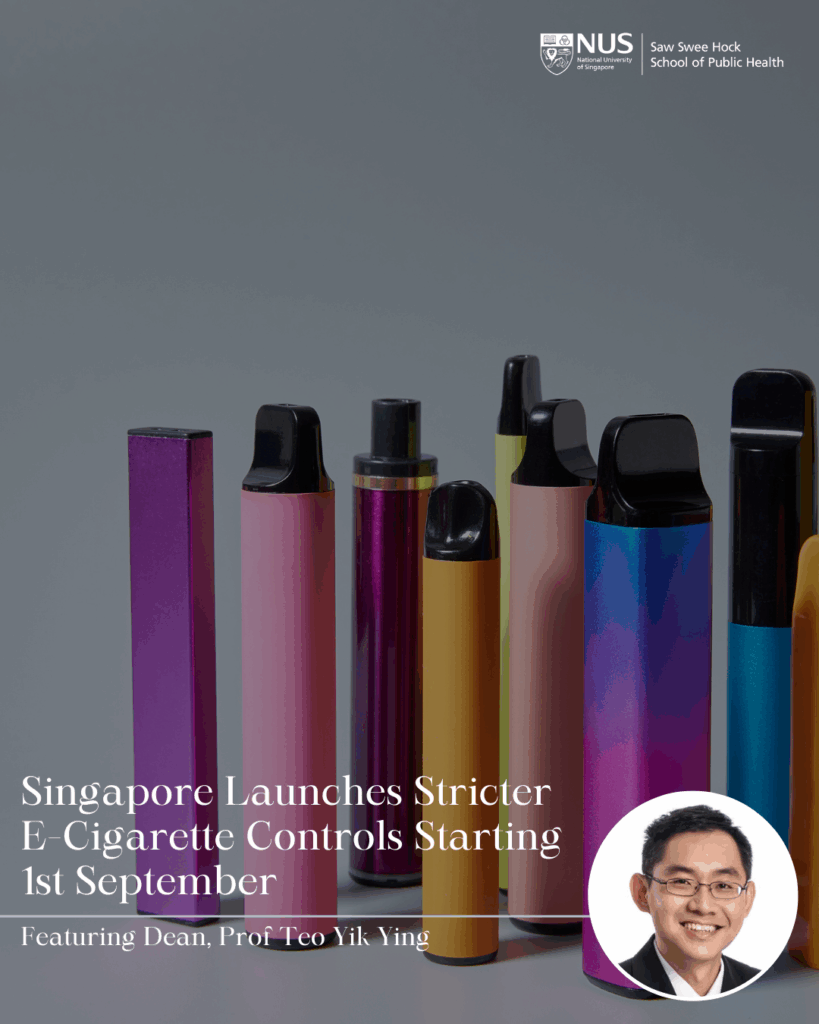
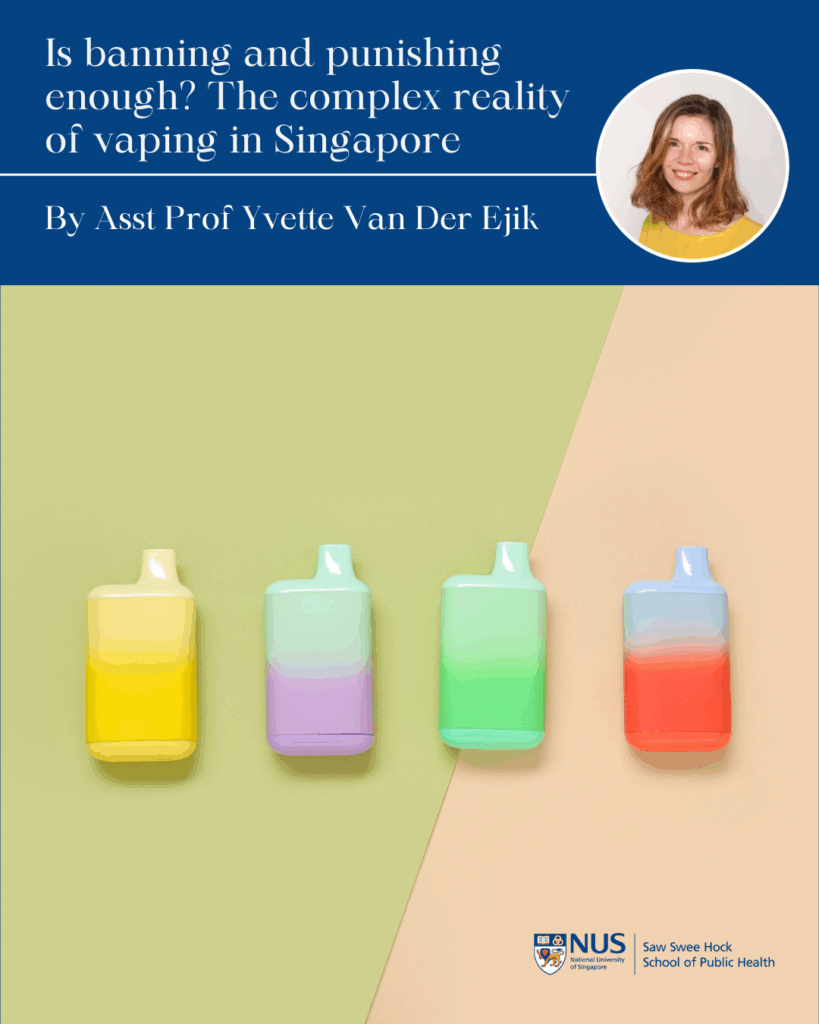
Is banning and punishing enough? The complex reality of vaping in Singapore

Even as Singapore cracks down on vaping with raids, seizures, and tougher penalties, experts warn that enforcement alone may not be enough. With some 300,000 vapes recently seized across the border and viral videos showing youths high on Kpods, the scale of the problem is clear.

Would legalising vaping offer a safer path through regulation or simply create new loopholes for companies to target youths?

Is banning and punishing enough? The complex reality of vaping in Singapore Read More »

Trendy or toxic This is how-Kpods-are-wrecking-numerous-lives-in-Singapore

Trendy or toxic? This is how Kpods are wrecking numerous lives in Singapore

Kpods, vape pods laced with anaesthetics, are fast becoming one of Singapore’s most urgent public health threats. Cheap, discreet, and marketed like regular e-vaporisers, they promise escape but instead fuel addiction, psychosis, and even death.

Beyond enforcement, what safe pathways can Singapore create to protect youth while reducing stigma?

Hear from Asst Prof Rayner Tan as he explains why stigma reduction, recovery support, and peer networks are vital to tackling Kpods and supporting long-term recovery.

Trendy or toxic? This is how Kpods are wrecking numerous lives in Singapore Read More »

UM-NUS-Academic-Symposium-2025-1

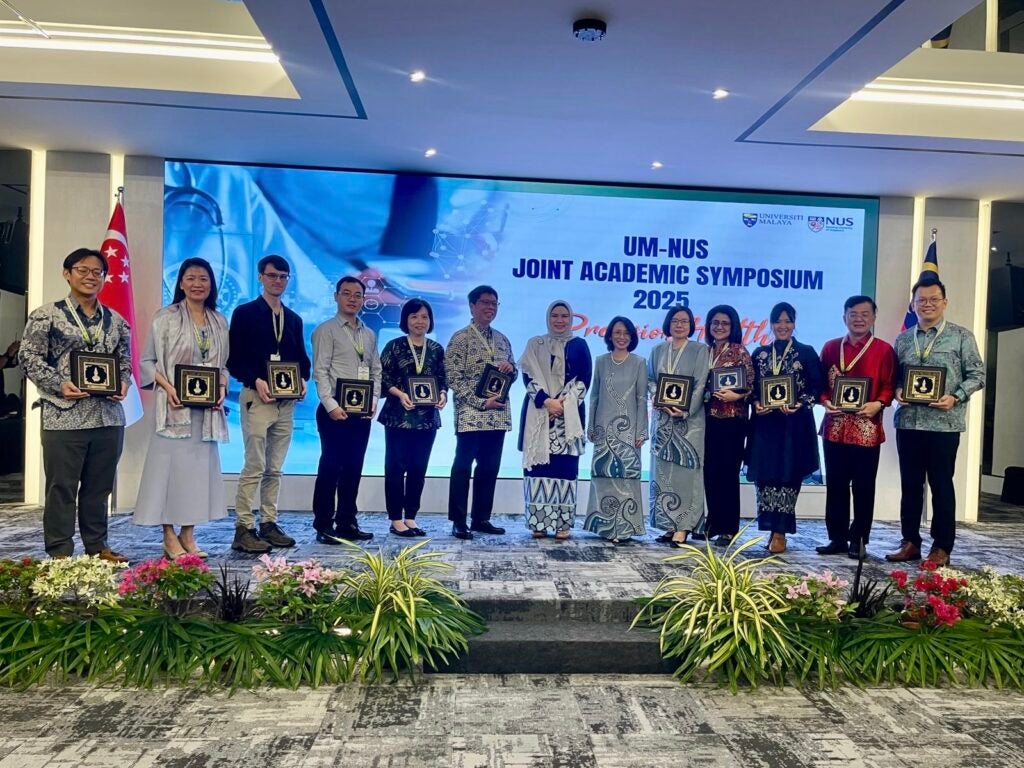
UM-NUS Academic Symposium 2025

The UM-NUS Joint Academic Symposium 2025, themed “Precision Health”, brought together leading thought leaders, scholars and clinicians from NUS and Universiti Malaya (UM) to showcase pioneering research in drug discovery, biomarkers, clinical AI applications, and advancements in precision health. This event was graced by the Singapore President and NUS chancellor, His Excellency Tharman Shanmugaratnam, and the Chancellor of the University of Malaya (UM), His Royal Highness Sultan Nazrin Muizzuddin Shah.

Among the highlights, Assoc Prof Sim Xueling from NUS Saw Swee Hock School of Public Health gave a presentation titled, “Redefining Risk Prediction in the Age of Multi-omics”, focusing on how multi-omics is transforming healthcare by integrating genomics, proteomics, metabolomics, and more for a holistic view of health. This approach improves risk prediction, uncovers new biomarkers, and enables personalized prevention and treatment. Together with clinical and environmental data, it drives a more precise and proactive model of care.

UM-NUS Academic Symposium 2025 Read More »

Meet-the-team-tracking-monkey-sounds-in-Singapore-to-stop-emerging-diseases

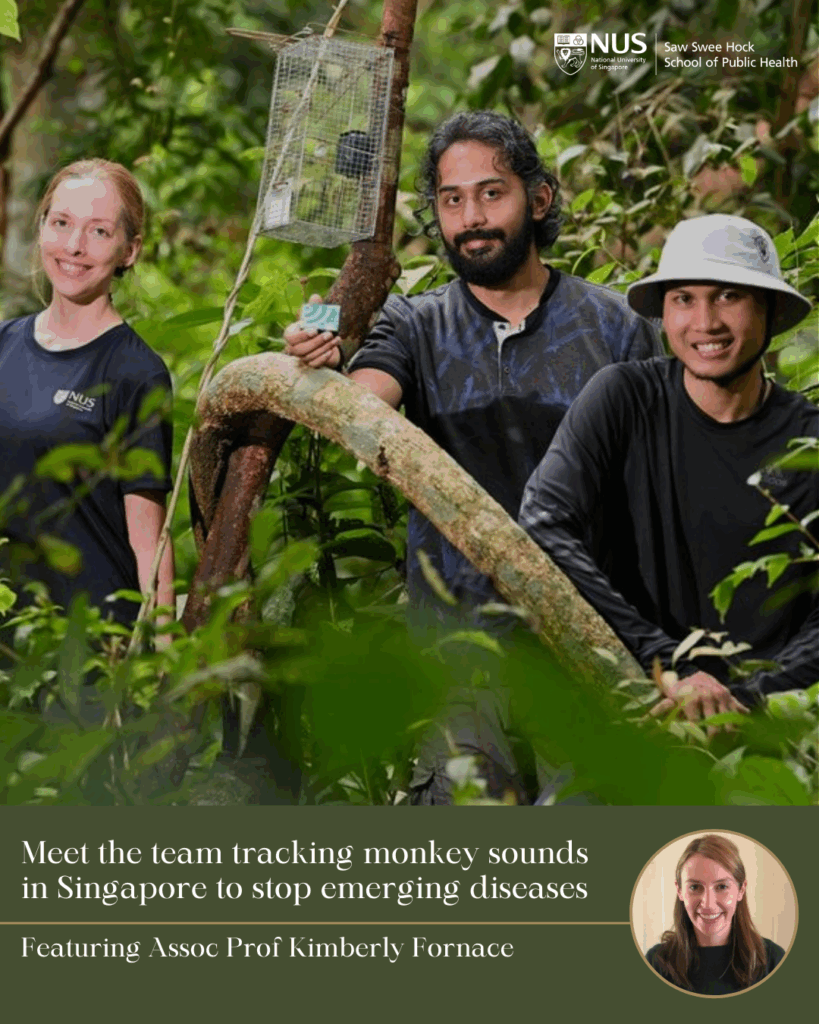
Meet the team tracking monkey sounds in Singapore to stop emerging diseases

A research team led by Assoc Prof Kimberly Fornace is working to identify potential macaque monkey hotspots where a malaria-causing parasite carried by monkeys could spread to humans. By recording the calls of these primates, which are the natural hosts of the parasite, researchers can track their presence in different areas without needing direct sightings.

Disease risks are exacerbated by climate change that prompt animal populations to move into new areas, where they may have increased contact with humans. The project is part of a wider effort to understand how climate change affects public health, alongside critical areas such as food security, water resources, and energy. As a global transport hub, Singapore must remain vigilant against the threat of emerging infectious diseases.

Meet the team tracking monkey sounds in Singapore to stop emerging diseases Read More »

NDR-2025-Putting-out-the-fire-of-vaping-through-stiffer-penalties

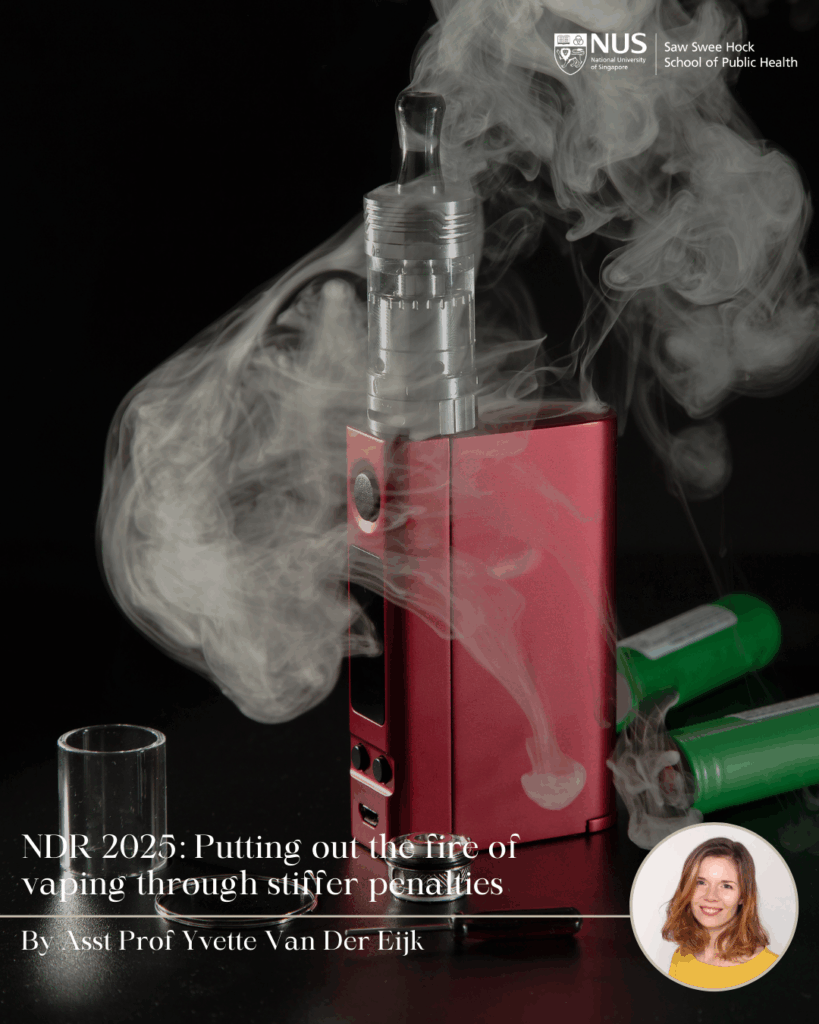
NDR 2025: Putting out the fire of vaping through stiffer penalties

In Singapore, vaping would be addressed as a drug-related issue, with stricter laws, heavier penalties, and possible jail terms for those selling harmful products. While such measures may deter some offenders, challenges such as addiction, mental health struggles, and social pressures are likely to persist.

To tackle these deeper issues, it is crucial to provide nuanced education and tailored support systems for young people, especially given the rise of illicit trade, misleading social media content, and porous borders in today’s society.

Hear from Asst Prof Yvette Van Der Eijk as she shares her views on the measures announced by the government to clamp down on the vaping scourge and the support needed for addicts.

NDR 2025: Putting out the fire of vaping through stiffer penalties Read More »

Scroll to Top