

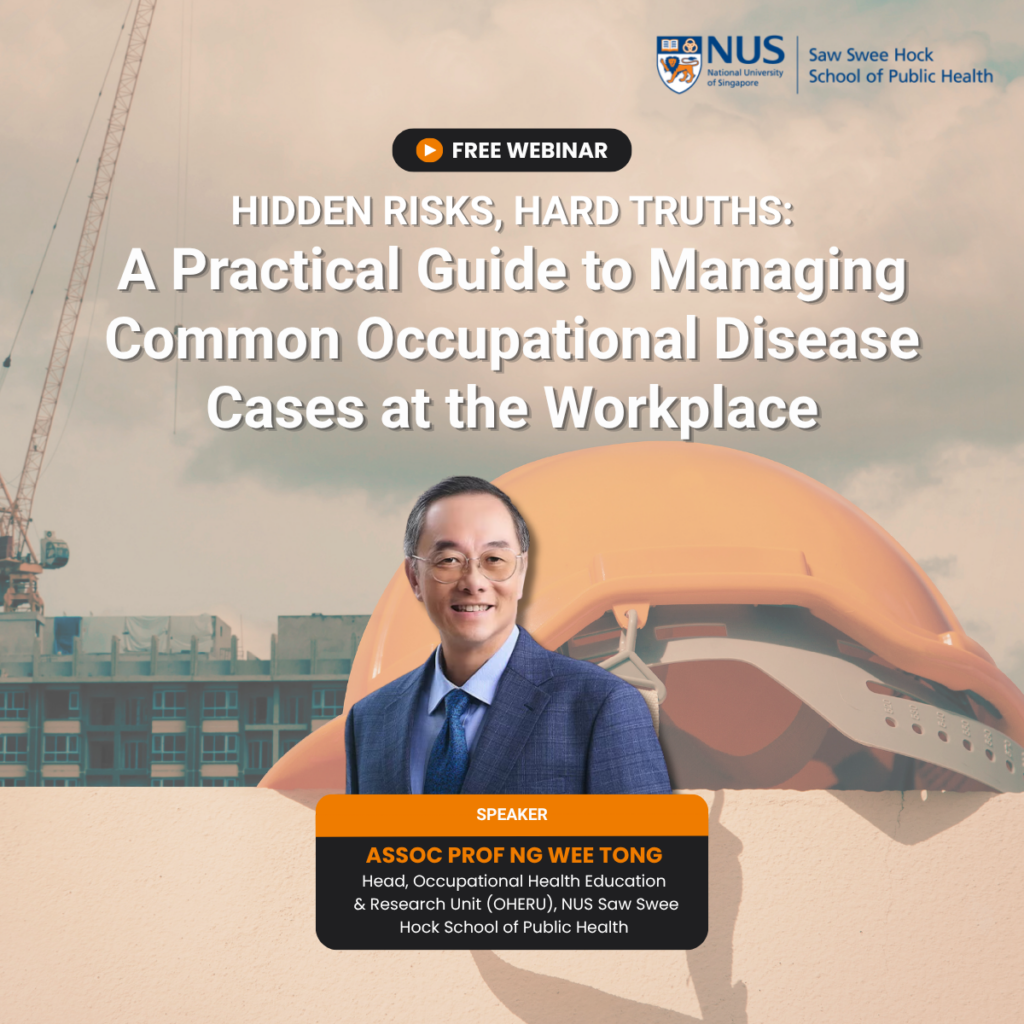
Occupational diseases often develop gradually and remain unnoticed until they become more serious workplace concerns.
To help professionals better recognise, manage, and prevent occupational disease cases, Assoc Prof Ng Wee Tong, Head of the Occupational Health Education & Research Unit, led the webinar “Hidden Risks, Hard Truths: A Practical Guide to Managing Common Occupational Disease Cases at the Workplace”. The webinar provided practical insights into navigating real-world occupational disease scenarios and the responsibilities of different stakeholders in protecting employee health.
The session saw strong participation, with more than 430 participants from across the workplace health and safety community, occupational health nurses, doctors, Workplace Safety and Health (WSH) officers, and Health, Safety and Environment (HSE) practitioners.
Through workplace-based examples and case discussions, the session highlighted common challenges that organisations may face, in recognising early warning signs, understanding when reporting obligations are triggered, and distinguishing between workplace-related symptoms and conditions that may be considered occupational diseases. This included covered practical approaches to managing common occupational disease concerns, including work-related musculoskeletal disorders, noise-induced hearing loss and contact dermatitis.
A key takeaway is the consideration of using a holistic approach when managing occupational disease cases, to not only support the affected employee, but also review workplace hazards and strengthening preventive measures to reduce recurrence.
For professionals looking to further strengthen their capabilities in occupational health and workplace risk management, there is an upcoming programme in August 2026, Professional Certificate in Implementing Total Workplace Safety and Health (Total WSH) in the Workplace. This programme provides practical approaches for identifying, assessing and managing occupational health risks in the workplace.