

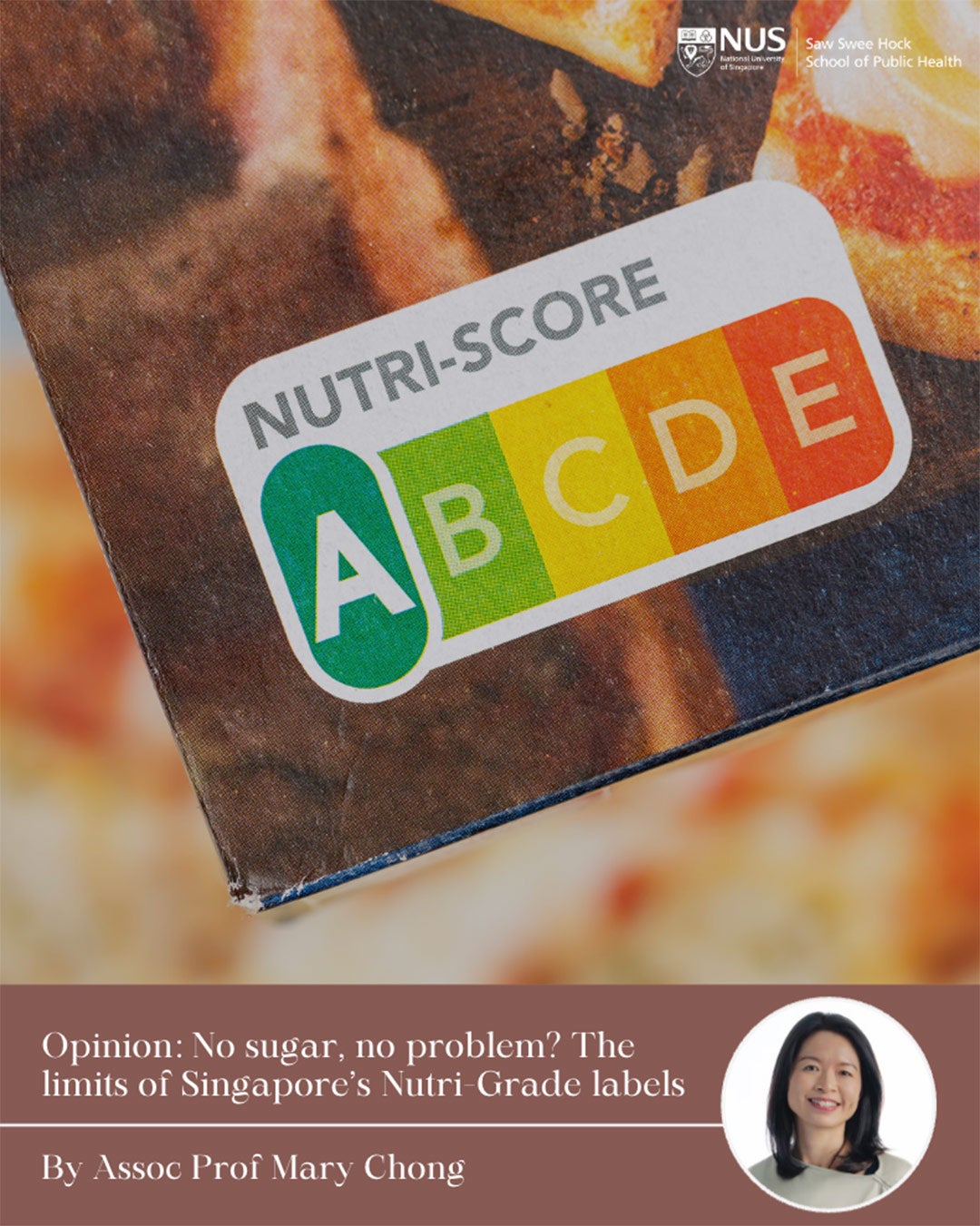
Singapore’s efforts to reduce sugar consumption have shown encouraging results, with average daily sugar intake falling from 60g in 2018 to 48g in 2025. While the Nutri-Grade beverage labelling system has contributed to this progress, an important question remains: are consumers developing healthier drinking habits, or simply switching to artificially sweetened alternatives?
Research suggests that greater awareness of Nutri-Grade labels is associated with higher consumption of artificially sweetened beverages, without necessarily reducing intake of sugar-sweetened drinks. This raises concerns about whether consumers may perceive lower-sugar options as inherently healthy, rather than recognising the importance of moderation.
Beyond guiding beverage choices, strengthening health literacy, expanding Nutri-Grade labelling and creating environments that support healthier drinking habits are essential to achieving lasting improvements in public health.
Hear from Assoc Prof Mary Chong and Mr Jared Ng from the Institute for the Public Understanding of Risk on why Singapore’s Nutri-Grade system must go beyond helping consumers compare beverages to empowering them to make more informed decisions about their health.