

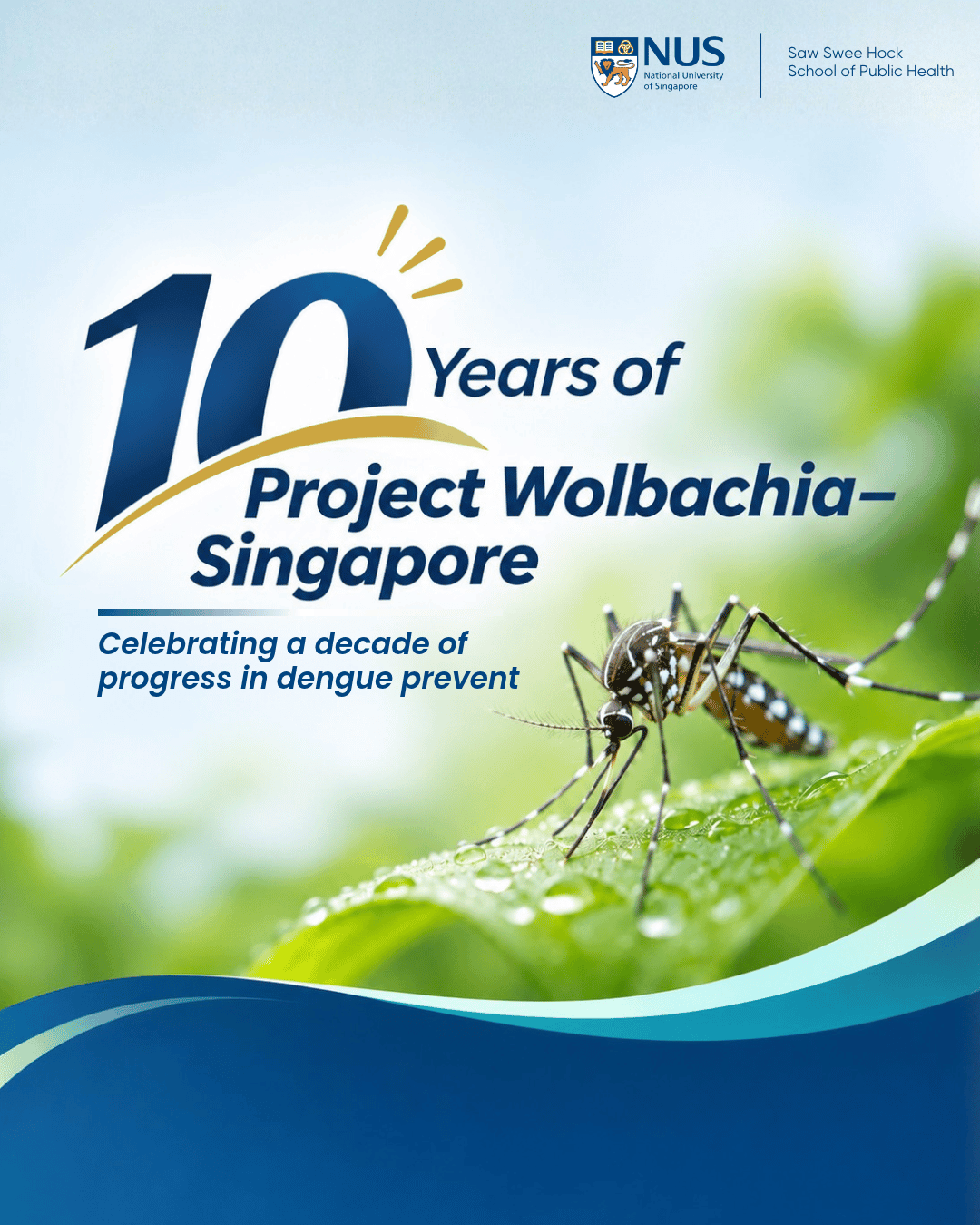
The 10th anniversary of Project Wolbachia–Singapore marks an important milestone in Singapore’s efforts to prevent dengue. It also highlights that translating scientific innovation into sustained public health protection requires rigorous evidence, operational capability and public trust.
The NUS Saw Swee Hock School of Public Health warmly congratulates the National Environment Agency (NEA), its Environmental Health Institute (EHI), and their partners on a decade of research, innovation and collaboration.
Since its first field releases in 2016, Project Wolbachia has advanced the use of male Wolbachia-carrying Aedes aegypti mosquitoes to suppress the wild mosquito population and reduce dengue risk. Its development illustrates the value of bringing research, implementation and community engagement together to address a complex public health challenge.
We recognise the leadership and dedication of Associate Professor Ng Lee Ching, who also holds an adjunct appointment at our School, alongside the scientists, operational teams, partners and residents who have supported the project. Our School is proud to have contributed research and expertise to this collective effort.
Looking ahead, sustaining progress calls for continued understanding of how dengue transmission, mosquito populations and population immunity change over time. Bringing together insights from epidemiology, mosquito ecology, genomics and health economics can help inform decisions about where and how interventions are deployed, how their impact is evaluated, and how resources can deliver lasting public health benefit.
This integrated perspective is essential because dengue prevention requires a combination of measures. Wolbachia complements conventional measures for mosquito control, which have been the bedrock of Singapore’s dengue control programme for decades: environmental management, surveillance and community action.
As Project Wolbachia enters its next decade, we look forward to continued collaboration with NEA, EHI and their partners to strengthen the evidence informing dengue prevention and translate scientific advances into healthier communities.