News

Survey-Nearly-70%-of-migrant-workers-prefer-face-to-face-psychological-support-but-fear-of-unemployment-remains-a-barrier-to-seeking-help

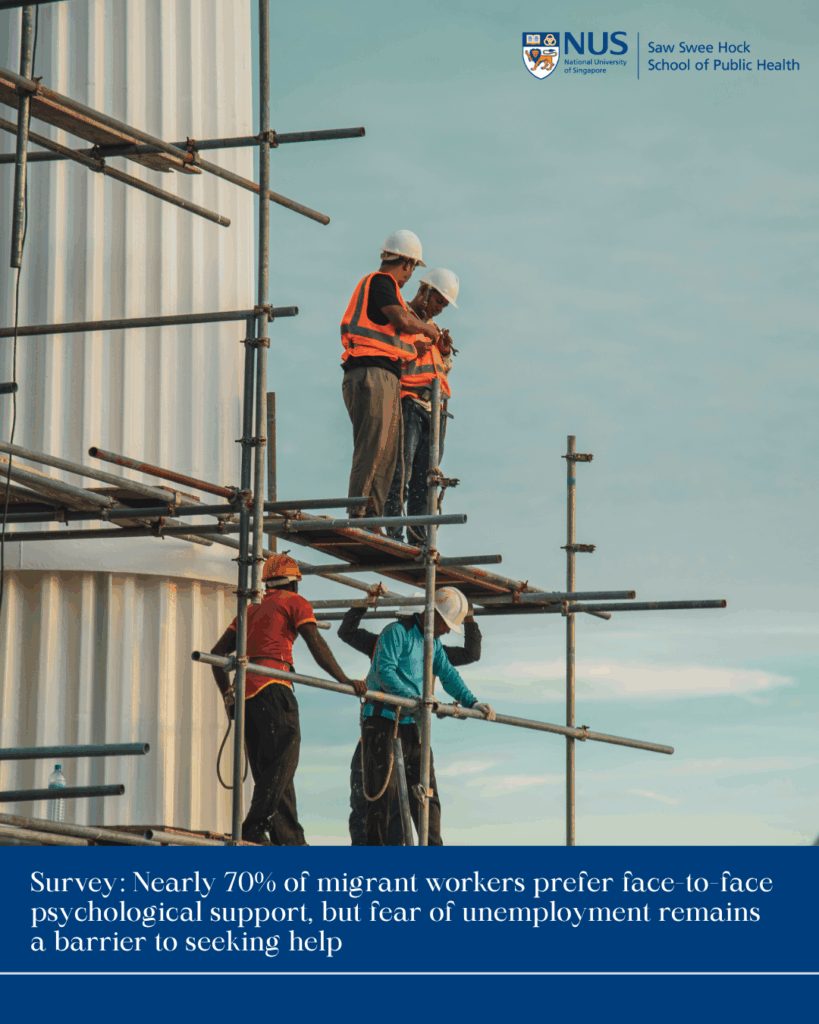
Survey Nearly 70% of migrant workers prefer face-to-face psychological support, but fear of unemployment remains a barrier to seeking help

Most migrant workers in Singapore prefer in-person mental health support, yet many hesitate — fearing job loss, stigma, or language difficulties. A study commissioned by the Ministry of Manpower and conducted by the NUS Saw Swee Hock School of Public Health and the Institute of Mental Health found that while levels of depression, anxiety, and stress are relatively low, these deep-rooted barriers continue to limit access to care.

How can mental health care become more accessible, inclusive, and culturally sensitive for vulnerable worker populations?

Find out how these findings point to the need for community and workplace initiatives that normalise help-seeking and build trust in mental health support.

Survey Nearly 70% of migrant workers prefer face-to-face psychological support, but fear of unemployment remains a barrier to seeking help Read More »

Forest-clearing-in-South-east-Asia-causes-more-heat-related-deaths-than-in-other-tropical-places

Forest clearing in South-east Asia causes more heat-related deaths than in other tropical places

An estimated 15,680 rural residents in South-east Asia die each year from heat-related complications worsened by deforestation. Despite the scale of these impacts, more local, population-based studies are needed to better understand how deforestation and rising temperatures affect community health.

Hear from Assoc Prof Kimberly Fornace as she explains why land cover must be factored into heat warning systems, and how rural communities, not just urban ones, face growing risks that existing health data often overlook, as the effects of rising heat differ across populations.

Photo credit: The Straits Times

Forest clearing in South-east Asia causes more heat-related deaths than in other tropical places Read More »

‘Zombie-Vapes’-Are-Sweeping-Across-Southeast-Asia-Sparking-a-New-Public-Health-Crisis

‘Zombie Vapes’ Are Sweeping Across Southeast Asia, Sparking a New Public Health Crisis

What may seem like harmless vaping has grown into a $30B industry with 82M users worldwide. Increasingly, vapes are being laced with new psychoactive substances that are cheap, accessible, and harder to regulate, fueling record levels of drug use among today’s youth.

Hear from Asst Prof Rayner Tan as he highlights how factors such as stigma, cost, and fear of legal consequences often prevent vulnerable groups from accessing much-needed interventions like therapy, support groups, and psychoeducation.

‘Zombie Vapes’ Are Sweeping Across Southeast Asia, Sparking a New Public Health Crisis Read More »

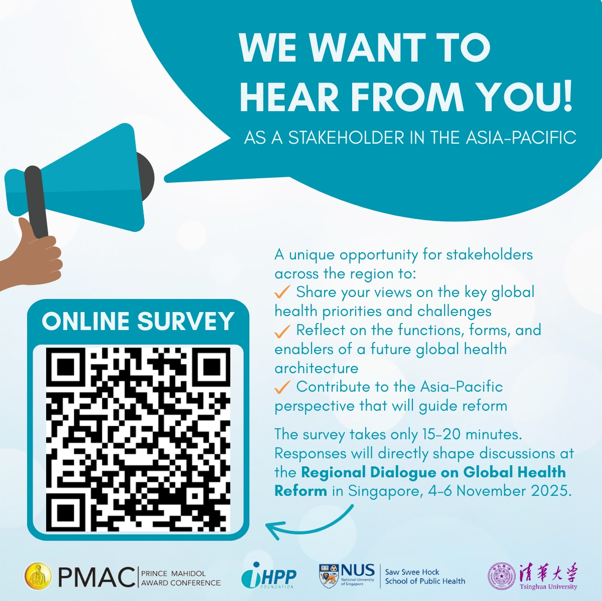
Rethinking the Architecture of Global Health: The Asia-Pacific Regional Dialogue

The global health system is at a critical juncture. Lessons from the COVID-19 pandemic and shifting geopolitical dynamics mean the current global health architecture must be rethought to become more equitable, inclusive, and responsive. We are leading the Asia-Pacific Regional Dialogue for the Wellcome Trust’s global initiative, culminating in a convening in Singapore on 4–6 November 2025. Your perspective is vital: we invite professionals from all sectors to complete our online survey to help shape global reform priorities.

Rethinking the Architecture of Global Health: The Asia-Pacific Regional Dialogue Read More »

Annual-Teaching-Excellence-Awards-(ATEA)-2

Annual Teaching Excellence Awards (ATEA) 2025

We are delighted to share that Dr Cecilia Teng and Dr Andre Matthias Müller have been recognised at the Annual Teaching Excellence Awards (ATEA) awarded by NUS. The ATEA honours excellence in teaching, from instruction and assessment to educational design, feedback, and the promotion of best practices through leadership and teamwork.

The Annual Teaching Excellence Award (Individual) was presented to Cecilia for her leadership in developing the undergraduate capstone internship course in the Public Health Minor and Second Major programmes, using evidence-based frameworks to deepen student engagement, collaboration, and professional growth.

The Annual Teaching Excellence Award (Team) was presented to Andre (Team Lead) and his team, Assoc Prof Jeannette Lee, Assoc Prof Jason Yap, Dr Ann Toh, and Eleanor Ong, for designing an innovative course for 900 freshmen across health disciplines, instilling values of empathy, compassion, and holistic person-centred care.

Please join us in celebrating their well-deserved recognition!

Annual Teaching Excellence Awards (ATEA) 2025 Read More »

MOH’s-addendum-Enhancing-support-for-seniors-as-population-ages

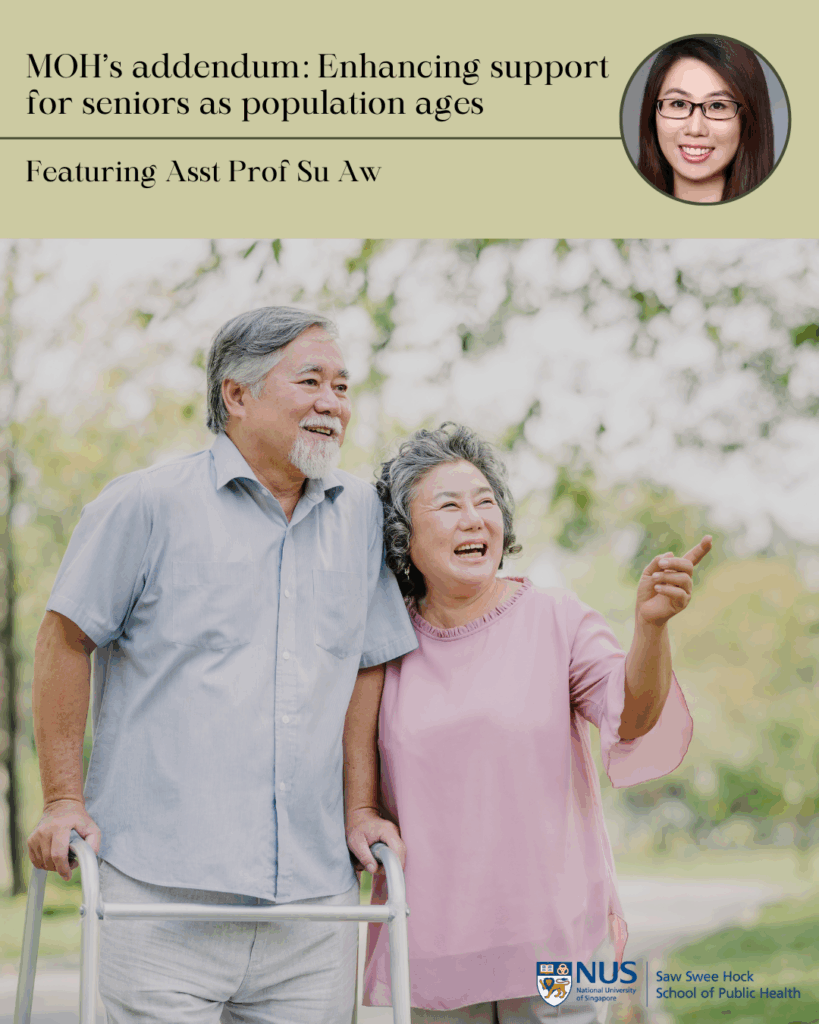
MOH’s addendum: Enhancing support for seniors as population ages

The Ministry of Health has announced major plans to strengthen care for Singapore’s ageing population, with a stronger emphasis on shifting services into the community. This includes expanding hospital and nursing home capacity, while ensuring that seniors have access to support closer to home.

But care must go beyond physical health. Asst Prof Su Aw discusses the importance of addressing both the mental and physical wellbeing of older adults, and what this means for training healthcare providers, delivering community-based care and creating safe spaces and programmes that support seniors’ mental health and social connections.

MOH’s addendum: Enhancing support for seniors as population ages Read More »

NUHS-teaching-excellence-award-2025

NUHS Teaching Excellence Awards 2025

We are delighted to announce that Asst Prof Jasper Tromp and Dr Andre Matthias Müller have been awarded the NUHS Teaching Excellence Award 2025.

This prestigious honour recognises educators who embody the NUHS values of Teamwork, Respect, Integrity, Compassion, Excellence, and Patient-Centredness, while demonstrating passion and innovation in nurturing the next generation of public health professionals.

NUHS Teaching Excellence Awards 2025 Read More »

Your-office-could-be-Singapore’s-next-big-health-intervention

Your office could be Singapore’s next big health intervention

Most adults spend nearly 40 years, a third of their waking lives at work. This makes the workplace a powerful yet often overlooked setting for promoting health and well-being.

How can workplaces evolve beyond productivity to become drivers of health and well-being?

Hear from Prof Teo Yik Ying as he advocates for “Work Well SG”, a vision that reimagines workplaces with preventive care, healthier environments, and mental health-focused cultures at their core.

Your office could be Singapore’s next big health intervention Read More »

1-National-Workshop-on-Strengthening-Antimicrobial-Stewardship-in-Healthcare-Facilities-in-Cambodia-and-Official-Launch-of-the-AMS-HICAP-Implementation-Research-Project

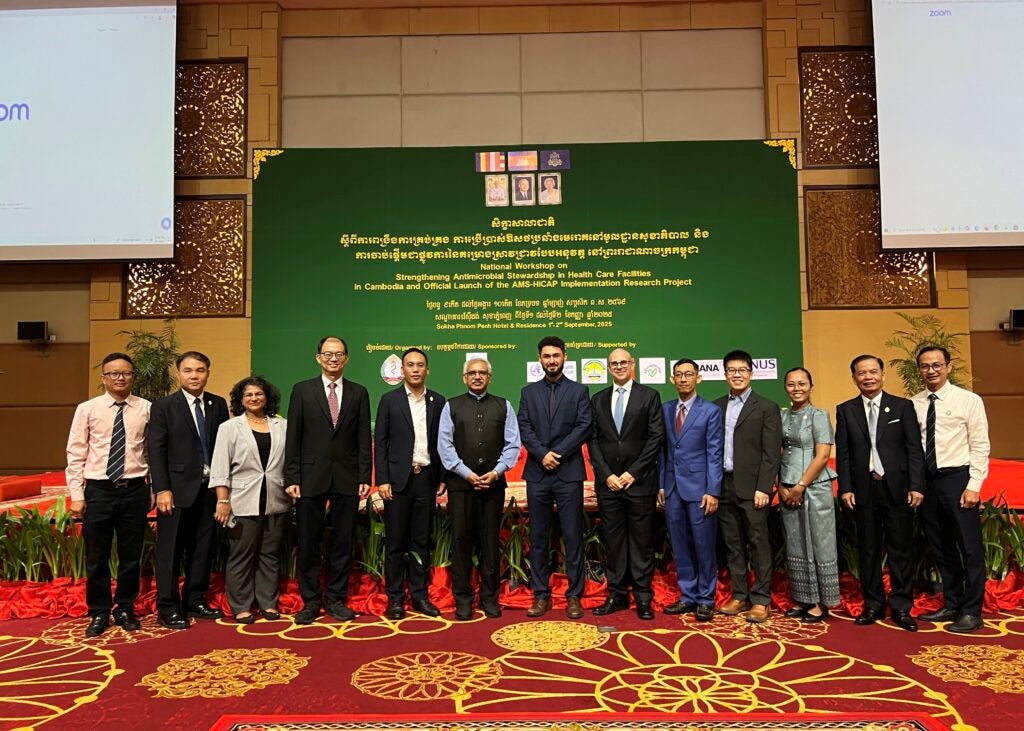
National Workshop on Strengthening Antimicrobial Stewardship in Healthcare Facilities in Cambodia and Official Launch of the AMS-HICAP Implementation Research Project

Dr. Alvin Chua and Professor Hsu Li Yang from the NUS Saw Swee Hock School of Public Health (SSHSPH) participated in a national workshop on antimicrobial stewardship (AMS) held from 1 to 2 September 2025 in Phnom Penh, Cambodia.

Organised by the Ministry of Health Cambodia and funded by the International Centre for Antimicrobial Resistance Solutions (ICARS), the workshop was supported by the World Health Organization (WHO) and core partners including the National Institute of Public Health, Calmette Hospital, Angkor Hospital for Children, KHANA, and NUS SSHSPH.

The event also marked the Official Launch of the AMS-HICAP Implementation Research Project, a new initiative funded by ICARS to strengthen AMS capacity in hospitals across the country. Dr. Chua and Prof. Hsu had previously collaborated with ICARS and the Cambodian core partners to develop the project.

The workshop brought together healthcare leaders from hospitals, universities, and international organisations to discuss the responsible use of antimicrobials and strategies to combat antimicrobial resistance (AMR). In his opening remarks, His Excellency Professor Chheang Ra, Minister of Health Cambodia, called for coordinated national and sub-national efforts to preserve the effectiveness of antimicrobials, improve health outcomes, and reduce costs.

Key recommendations included promoting responsible prescribing, enhancing training in universities, strengthening AMS and infection prevention and control (IPC), supporting laboratory collaboration, sharing AMR data, and advancing research partnerships.

Following the workshop, the core team conducted site visits to hospitals in Phnom Penh. These visits provided valuable insights into microbiology laboratories, IPC units, pharmacy services, and clinical wards, highlighting both progress and challenges in implementing AMS programmes.

National Workshop on Strengthening Antimicrobial Stewardship in Healthcare Facilities in Cambodia and Official Launch of the AMS-HICAP Implementation Research Project Read More »

Scroll to Top