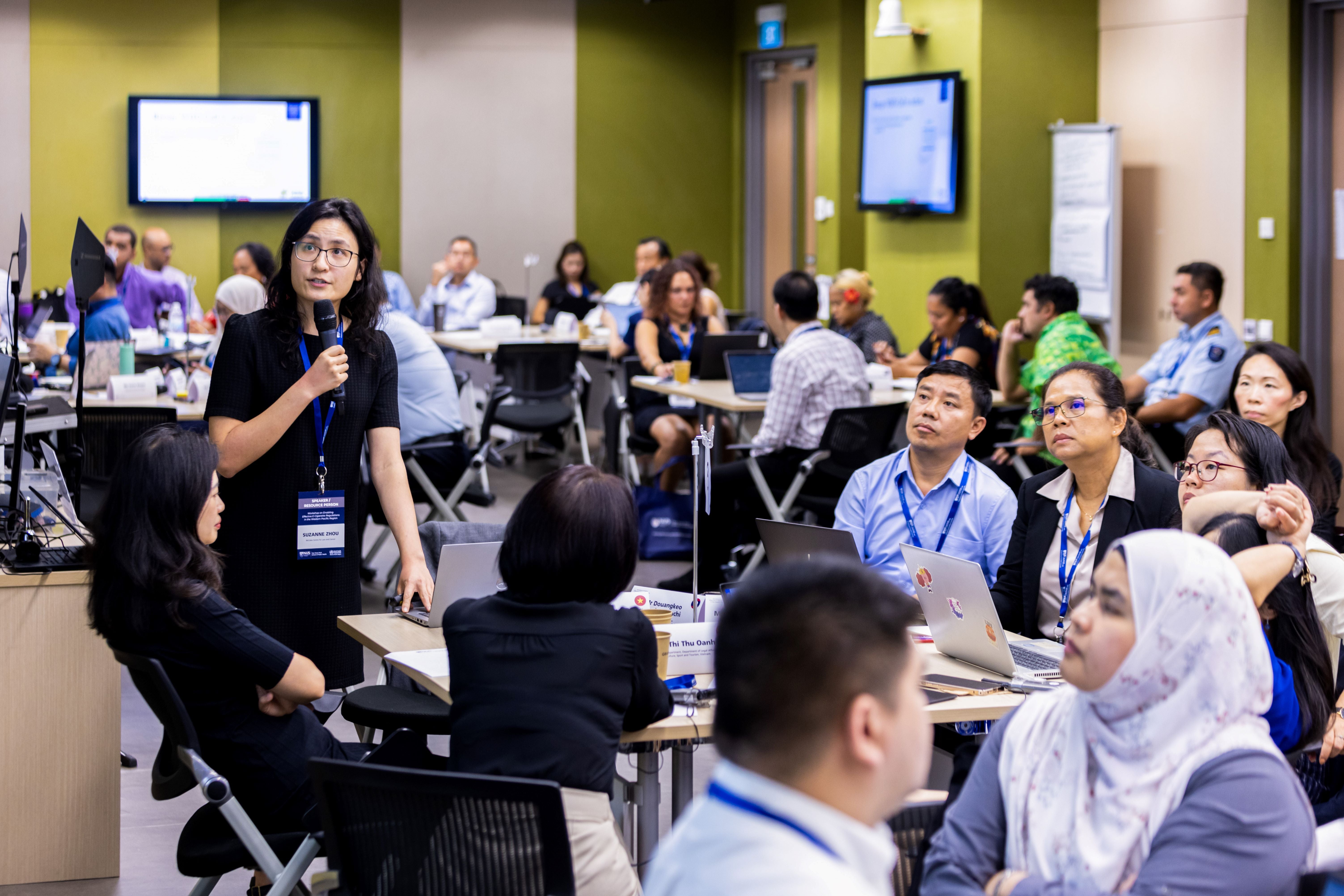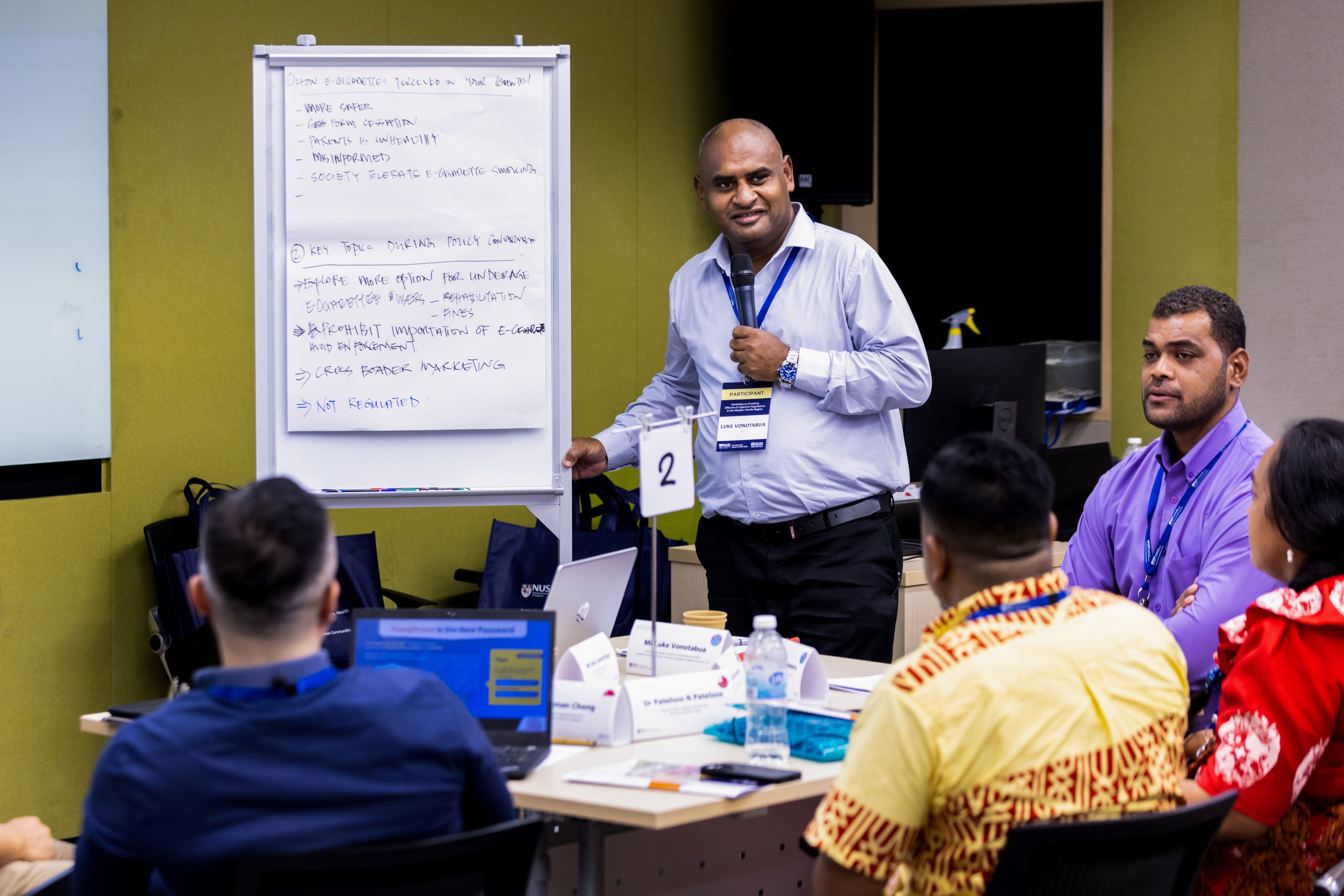

From 7-9 May, NUS Saw Swee Hock School of Public Health (SSHSPH) hosted an impactful 2.5-day workshop co-organised with World Health Organization Regional Office for the Western Pacific (WPRO). The event brought together representatives from 14 countries across the Western Pacific to discuss and tackle the challenges in e-cigarette regulation.
At the workshop, which aims to equip policymakers with the necessary knowledge and tools to achieve their regulatory goals, participants engaged in dynamic discussions about the core elements and challenges in e-cigarette regulations. They shared insights from their respective countries, and fostered a collaborative environment. Referring to the shared learning experience, Dr Ulysses Dorotheo, Executive Director of Southeast Asia Tobacco Control Alliance (SEATCA), remarked, “we are excited to continue collaboration with NUS, WHO, and other government and civil society partners, as our collective experiences and expertise are essential for achieving universal protection from the very real threat of nicotine addiction and other health, socio-economic, and environmental harms posed by e-cigarettes and other products of the tobacco industry.”
A highlight of the workshop was the field visits to Woodlands Checkpoint and the Health Sciences Authority. These visits allowed participants to understand some of the enforcement measures employed by Singapore, and to witness their implementation on the ground.
With accumulated experience from the shared learning and on-site observations, workshop participants later collaborated in groups to develop concrete, actionable and timebound plans to strengthen e-cigarette regulations in their countries.
As countries continue to face evolving threats to public health from e-cigarettes and other products of the tobacco industry, the importance of shared knowledge and collective efforts in developing effective and sustainable countering strategies was echoed by Dean of SSHSPH, Prof Teo Yik Ying, in his closing remarks, ” I believe the workshop has helped to kickstart the sharing of practices, like what we have done these three days, to understand our own country’s challenges against e-cigarettes. By sharing our successes and failures with each other, we will be in a better position to put forward e-cigarette regulations that are more effective when implemented. At the same time, we should not overlook the importance of cessation strategies, to help those who are already addicted to e-cigarettes to quit the harmful habit”.
A big thank you to all participants, speakers, and resource persons for their dedication and contributions to making this workshop a tremendous success.