

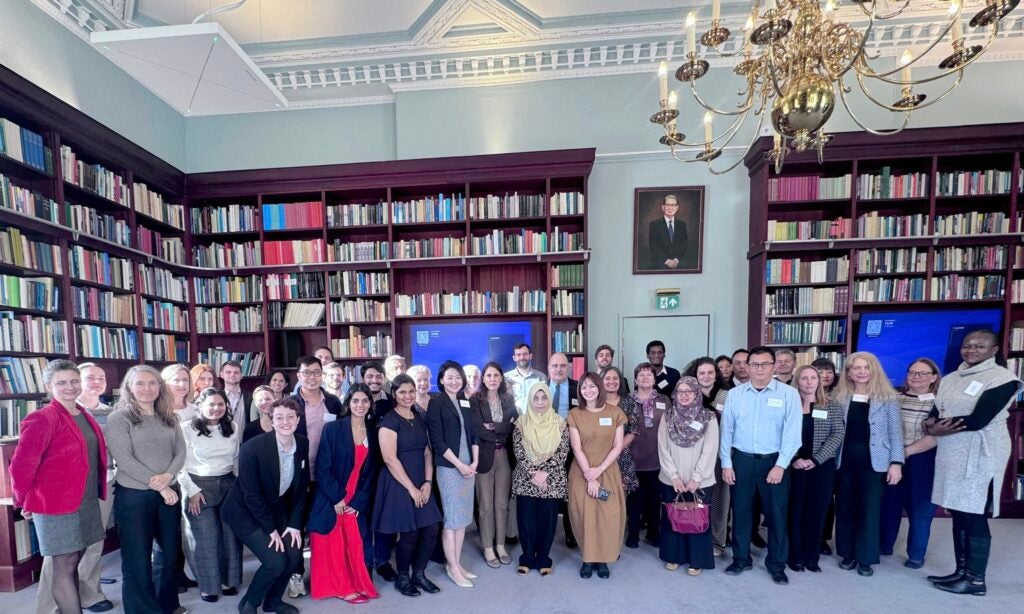
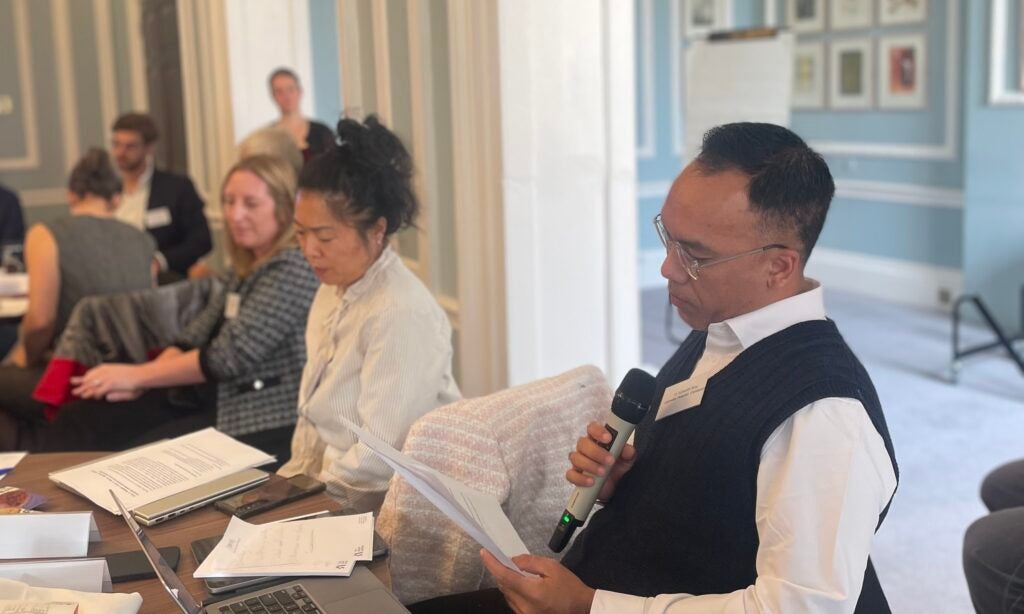
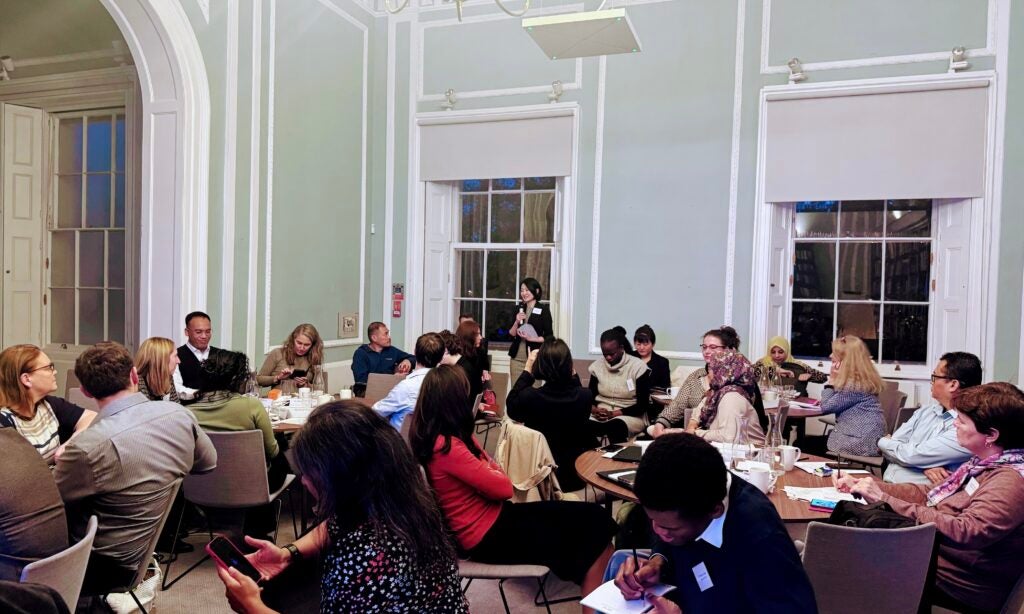

On November 4th at the British Academy in London, ADVANCE-ID welcomed a unique gathering of global experts in antibiotic access. With representatives from pharmaceutical development and manufacturing, international drug regulators, law and policy, healthcare professionals, global health actors, NGOs and patient advocates, participants shared their experiences working in antibiotic access and highlighted urgent challenges and priorities in their field.
“There are no borders for AMR action.”
The session attendees heard talks from clinicians and pharmacists on their experience accessing novel antibiotics and diagnostics in their hospitals. From regulators and NGOs, we learned about past and ongoing programs to facilitate equitable access to antibiotics, the challenges faced, and the lessons learned. We also heard insights from funders and pharmaceutical manufacturers on the financial pitfalls of antibiotic development and the barriers to market access in LMICs. Most strikingly, we had the opportunity to hear from patient advocates on their experience trying to access unregistered antibiotics in an LMIC healthcare system, demonstrating the painful uncertainty and human cost of inequitable antibiotic access.
“What does it mean for products to be designed with LMICs in mind?”
Particularly insightful were the panel discussions with perspectives from regulators, funders, pharmaceutical industry representatives, and academic researchers. The first discussion, on identifying bottlenecks in the AMR pipelines, lack of regulatory reliance, loss of research and development knowledge in industry, and the difficulty of incentivising market entry in small countries. The second discussion, on identifying key stakeholders and opportunities for action, illustrated the importance of considering LMIC contexts from Day One of product development, the need for coordinated leadership, and the necessity of unified efforts across sectors.
“If you had a magic wand, what would you change?”
Following these talks, we broke out into expert discussion groups with the goal of identifying specific barriers and solutions for each of the five pillars identified by the Roadmap to Access to Newer Antibiotics in Asia: 1) regulatory aspects and clinical trials 2) patient advocacy and ethics 3) improve surveillance for data generation 4) commercialisation of drugs and procurement and 5) improved infrastructure in antibiotic stewardship, infection prevention and control and diagnostics which should be primary to new drug introduction.
We aim to synthesize and publish these invaluable expert insights on the Roadmap that can guide action on AMR access, highlighting the ways in which each stakeholder has a critical role to play and catalysing the step from discussion to action.
“Who can help me?”
There was a resoundingly clear takeaway from this workshop: AMR action must be multisectoral. By bringing together the key stakeholders from across domains, we hope to unite our efforts and identify opportunities for collaboration. As Dr. Mo Yin asked our participants to consider, “Think about one or two things that you can do. If you can’t do it on your own, look across the room and think, ‘who can help me?’
We leave this gathering with a renewed perspective and a unified purpose: to work within and across our domains to drive sustainable and equitable antibiotic access. Most importantly, we leave with new partnerships to pave the way forward together.