
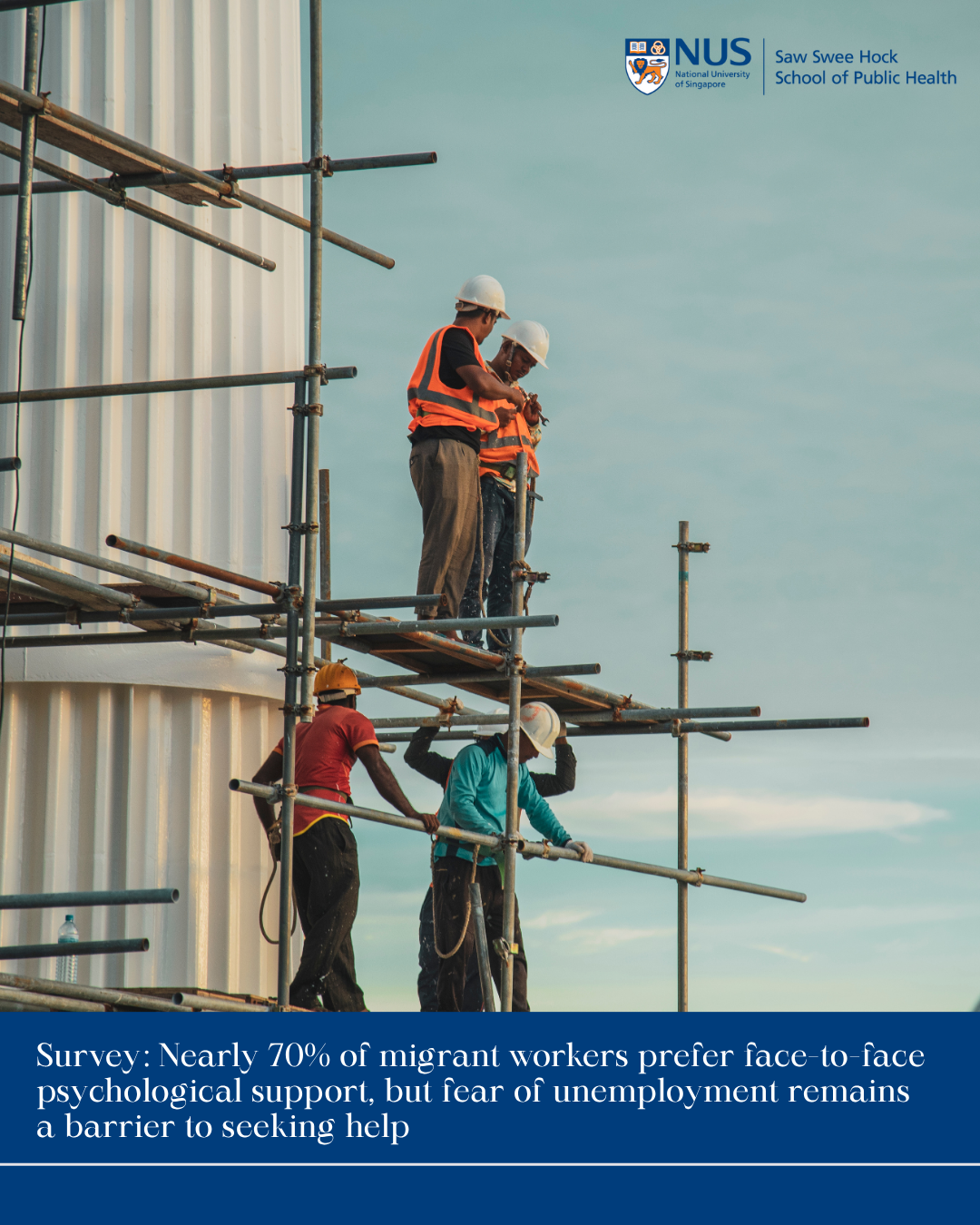
Most migrant workers in Singapore prefer in-person mental health support, yet many hesitate — fearing job loss, stigma, or language difficulties. A study commissioned by the Ministry of Manpower and conducted by the NUS Saw Swee Hock School of Public Health and the Institute of Mental Health found that while levels of depression, anxiety, and stress are relatively low, these deep-rooted barriers continue to limit access to care.
How can mental health care become more accessible, inclusive, and culturally sensitive for vulnerable worker populations?
Find out how these findings point to the need for community and workplace initiatives that normalise help-seeking and build trust in mental health support.