
Scaling Access to Ensure Health Equity
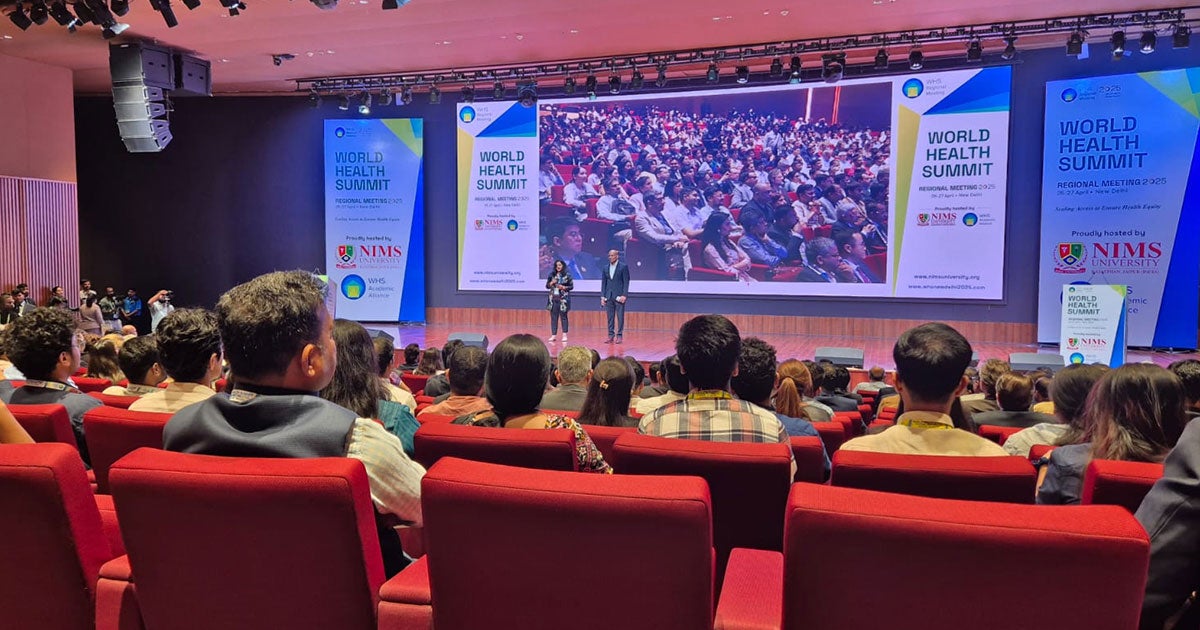
The first regional meeting of the World Health Summit (WHS) to be held in India attracted 5,000+ participants from 50+ countries joining the 160+ sessions over the three days meeting. The enthusiasm and active engagement of the many participants were evident throughout the event, with discussions and calls to action centered around the theme of “Scaling Access to Ensure Health Equity”. Topics of discussions included Future of Health, Health Diplomacy and Cooperation, Climate Change and Planetary Health and Innovation and Leadership.
The National University Singapore was a key voice in the conversations. The Dean of the Saw Swee Hock School of Public Health, Prof Teo Yik Ying was invited to speak at the following stimulating sessions, with key takeaways as follows:
1. Beyond Silos: Asia’s Role in Advancing Global Health Equity through Diplomacy
Given the current geopolitical climate and multilateralism on the brink, there is room for regional actors to take leadership to advance global health equity through diplomacy. To ensure that regional governance mechanisms are based on equity and solidarity, including in their co-investment initiatives and long-term foresight. Particularly, Association of Southeast Asian Nations (ASEAN) countries, either through the ASEAN Centre for Public Health Emergencies and Emerging Diseases and/or coalition of the willing, can use joint power as leverage for the procurement of health products, sustainable financing and/or global health diplomacy training of the future generations.
2. Where do we go from here? Governance for Planetary Health
With One Health being included for the first time within an international law instrument – as part of the “greened” text of the Pandemic Agreement for adoption at the 78th World Health Assembly this May, it illustrates a big step forward for human, animal and environmental health. However, it is not without its implementation challenges, particularly at the national level considering limited resources and capacities. The Conference of the Parties, to be established under the Pandemic Agreement, will develop and adopt guidelines for effective implementation of One Health. Practices of the Conference of the Parties under the United Nations Framework Convention on Climate Change may serve as reference and guidance.
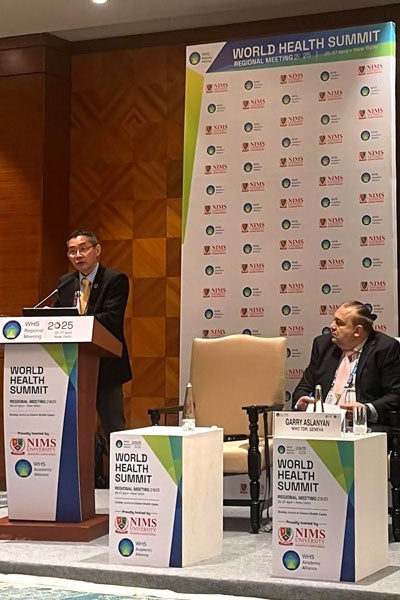
3. Navigating Health Diplomacy in a Shifting Geopolitical Landscape: Challenges and Opportunities to the Multilateral System and the Path Forward
Following the United States’ withdrawal from the World Health Organization and various budget cuts over the years, a new geopolitical order is emerging – signaling a shift away from traditional hegemony toward a more multipolar landscape in global health governance. Such a move will also reveal how changing diplomatic relations contribute to the evolution of international law, including the adoption and ratification of the Pandemic Agreement. This also highlights the colonial donor-recipient funding mechanism in global health and underlines the need for a sustainable and innovative domestic funding mechanism to ensure that local priorities are not neglected. More than ever, we need responsible politicians and policymakers who are committed to long-term investment for health and integrate health in all policies notwithstanding limited resources.

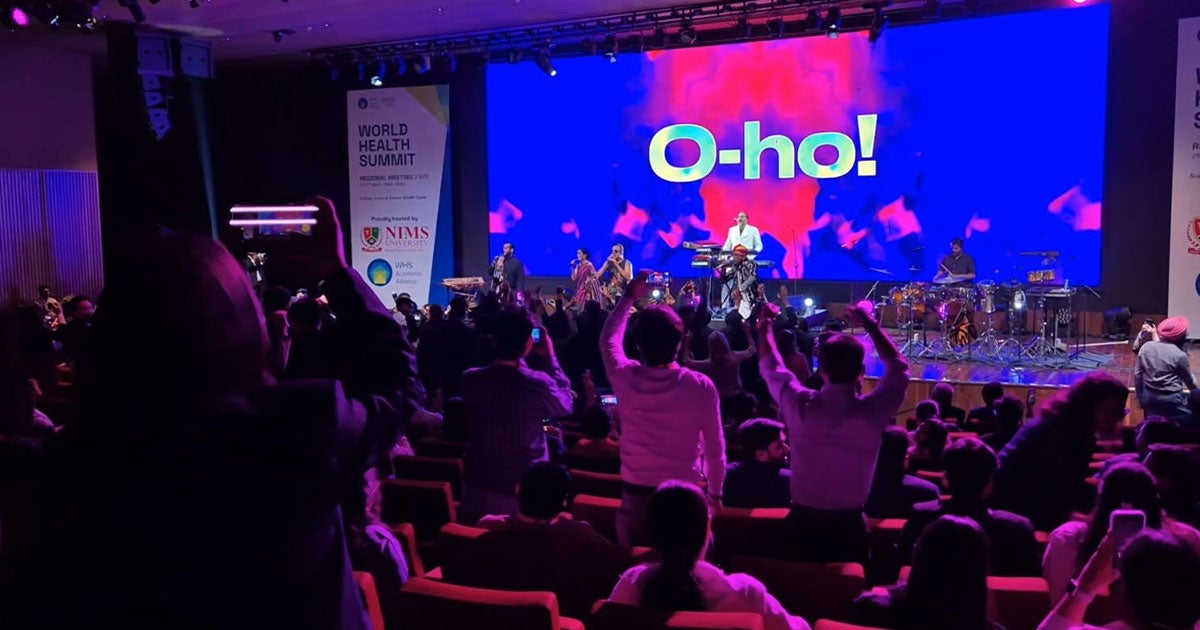
In case you missed the opportunity to attend the meeting in person, the sessions are now accessible here though you might not find the special concert by Grammy award winning musician and climate activist, Ricky Kej, which got attendees on their feet!
Role of NUS SSHSPH as part of the WHS Academic Alliance
The National University of Singapore is the only Southeast Asian member of the WHS Academic Alliance, the academic partnership of the WHS. The pre-conference meeting of the WHS Academic Alliance discussed the plans for the next WHS Regional Meeting in Nairobi, as well as the Alliance’s strategy to serve as a platform for communication and networking for its members. The Dean of SSHSPH, Prof Teo Yik Ying, is an Executive Committee member of the WHS Academic Alliance.
Young Leaders in Global Health Award
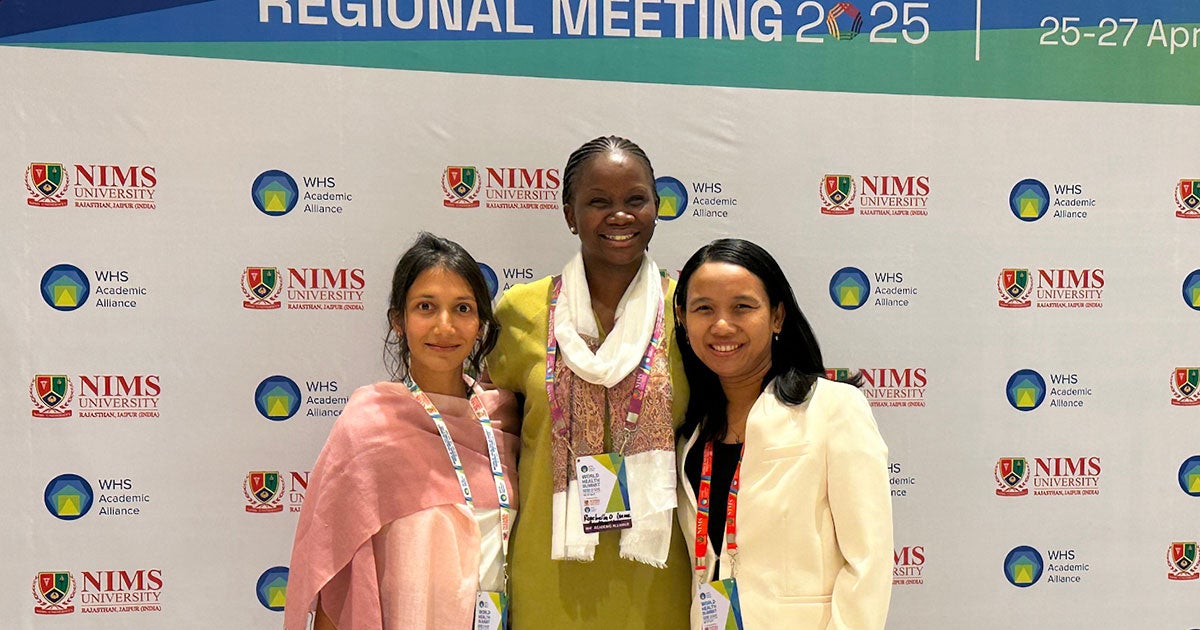
Through the WHS Academic Alliance, five passionate and emerging leaders in global health were selected to attend the WHS. The awardees included Afifah Rahman-Shepherd, nominated by the National University of Singapore; Antonia Morita Saktiawati, nominated by the InterAcademy Partnership; Rosebella Iseme-Ondiek, nominated by the Aga Khan University; Valentina Baccolini, nominated by the Sapienza University of Rome; and Francisco Tsz Tsun Lai, nominated by HKUMed.
The opportunity for aspiring global health leaders, researchers, and practitioners to exchange knowledge, ideas, and connections at the WHS is unique, and an exciting career highlight. Thank you to the WHS Academic Alliance for supporting the next generation!
Moving Forward
Following three days of invigorating dialogues, experts and participants share cautious optimism in the future of global health governance. We look forward to continuing the conversation at the World Health Summit in Berlin on 12–14 October 2025!