
RESEARCH ROUND
The artificial lines separating health policymaking and clinical decision-making
Date:
25 February 2026, Wednesday
Time:
11.00am – 12.00pm Singapore [GMT +8]
Location:
Seminar Room 2, Level 8
Tahir Foundation Building (MD1)
National University of Singapore
12 Science Drive 2, Singapore 117549
Abstract:
Health policymakers and care providers ultimately share the same objective: maximizing the population and individuals’ health given limited resources. In practice, however, decision modeling (under the banner of Health Technology Assessment) has become the realm of the economist, while optimizing clinical practice is the turf of the biostatistician. This is perhaps dictated by the methodology: HTA invokes involves utility theory, explicitly models costs, and often requires computer simulations. On the other hand, risk stratification algorithms at bedside are often data-driven, and focus on clinical outcomes.
This talk argues that this separation, from a principle’s perspective, is artificial. Critically, the concept of net benefit is pervasive in both camps, as well as the challenges in decision making under uncertainty. This means several methodological frameworks developed in health economics and HTA can be ported to clinical prediction modeling. The speaker shares their journey from training in medicine, then health policymaking and then predictive analytics. The speaker borrows from parallel developments in the field, in particular in net benefit calculations for quantifying the value of competing decisions, and recent developments on Value of Information analysis in risk prediction modeling.
The overall aim is to invite researcher in each camp to come out of their silos and work together on the shared vision of improving population and patient outcomes while minimizing costs.
Speaker:
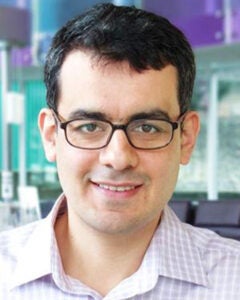
Mohsen Sadatsafavi
Associate Professor, Faculty of Pharmaceutical Sciences
University of British Columbia
Mohsen is an academic epidemiologist with a keen interest in the methods and applications of decision theory in healthcare and health research. He is particularly interested in improving efficiency in medical decision-making and evidence collection. He studies the implications of uncertainty in evidence and its impact on the outcomes of decisions.
Mohsen believes that questions around decision efficiency are fundamentally similar at clinical and health policy levels but observes a lack of interaction between the respective methodological communities. Through his methodological work on uncertainty quantification and Value of Information analysis, he aims to bridge this gap. His applied research focuses on respiratory diseases. He has authored / co-authored over 270 publications, serves on the Scientific Committees of several international studies, and has contributed to guideline development in respiratory medicine. Mohsen is currently the Statistical Editor for Thorax and an Editorial Board member of Medical Decision Making.
[CME, CPE, and CDE points may be awarded, pending SMC’s and SPC’s approval respectively. Please provide your MCR, DCR, or PRN number during registration]