Date:
13 August 2025, Wednesday
Time:
2pm SGT (Time Zone Conversion)
Platform:
Zoom
Synopsis:
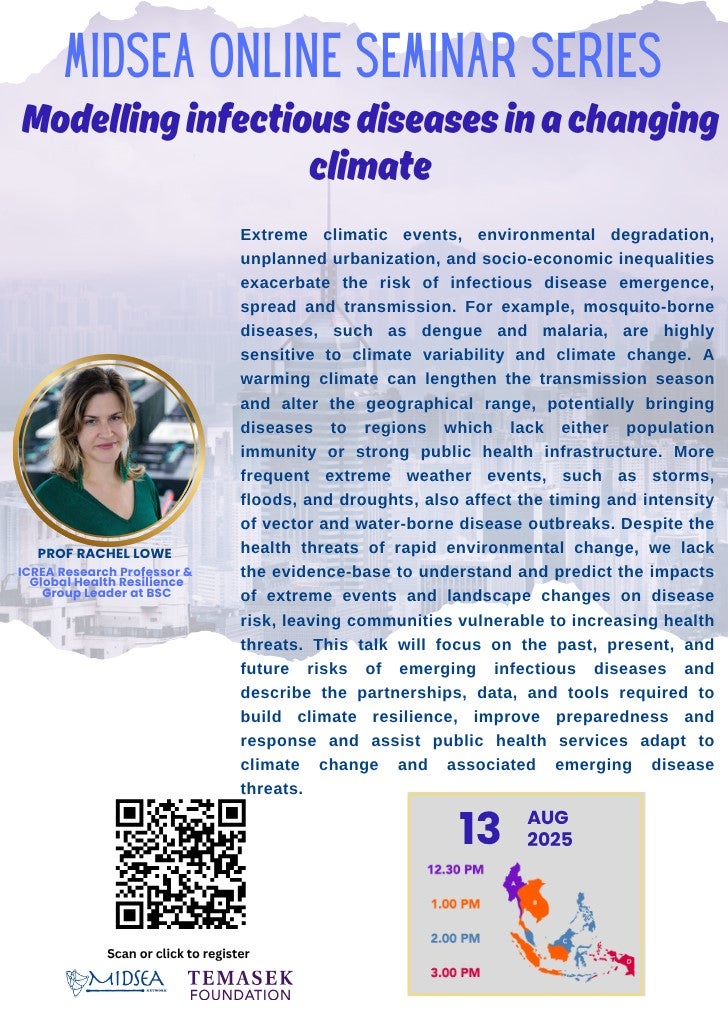
Extreme climatic events, environmental degradation, unplanned urbanization, and socio-economic inequalities exacerbate the risk of infectious disease emergence, spread and transmission. For example, mosquito-borne diseases, such as dengue and malaria, are highly sensitive to climate variability and climate change. A warming climate can lengthen the transmission season and alter the geographical range, potentially bringing diseases to regions which lack either population immunity or strong public health infrastructure. More frequent extreme weather events, such as storms, floods, and droughts, also affect the timing and intensity of vector and water-borne disease outbreaks. Despite the health threats of rapid environmental change, we lack the evidence-base to understand and predict the impacts of extreme events and landscape changes on disease risk, leaving communities vulnerable to increasing health threats. This talk will focus on the past, present, and future risks of emerging infectious diseases and describe the partnerships, data, and tools required to build climate resilience, improve preparedness and response and assist public health services adapt to climate change and associated emerging disease threats.
About the speaker:
Professor Rachel Lowe
ICREA Research Professor
Global Health Resilience Group Leader at the Barcelona Supercomputing Center
Royal Society Dorothy Hodgkin Fellow at the London School of Hygiene & Tropical Medicine